The Melonhead
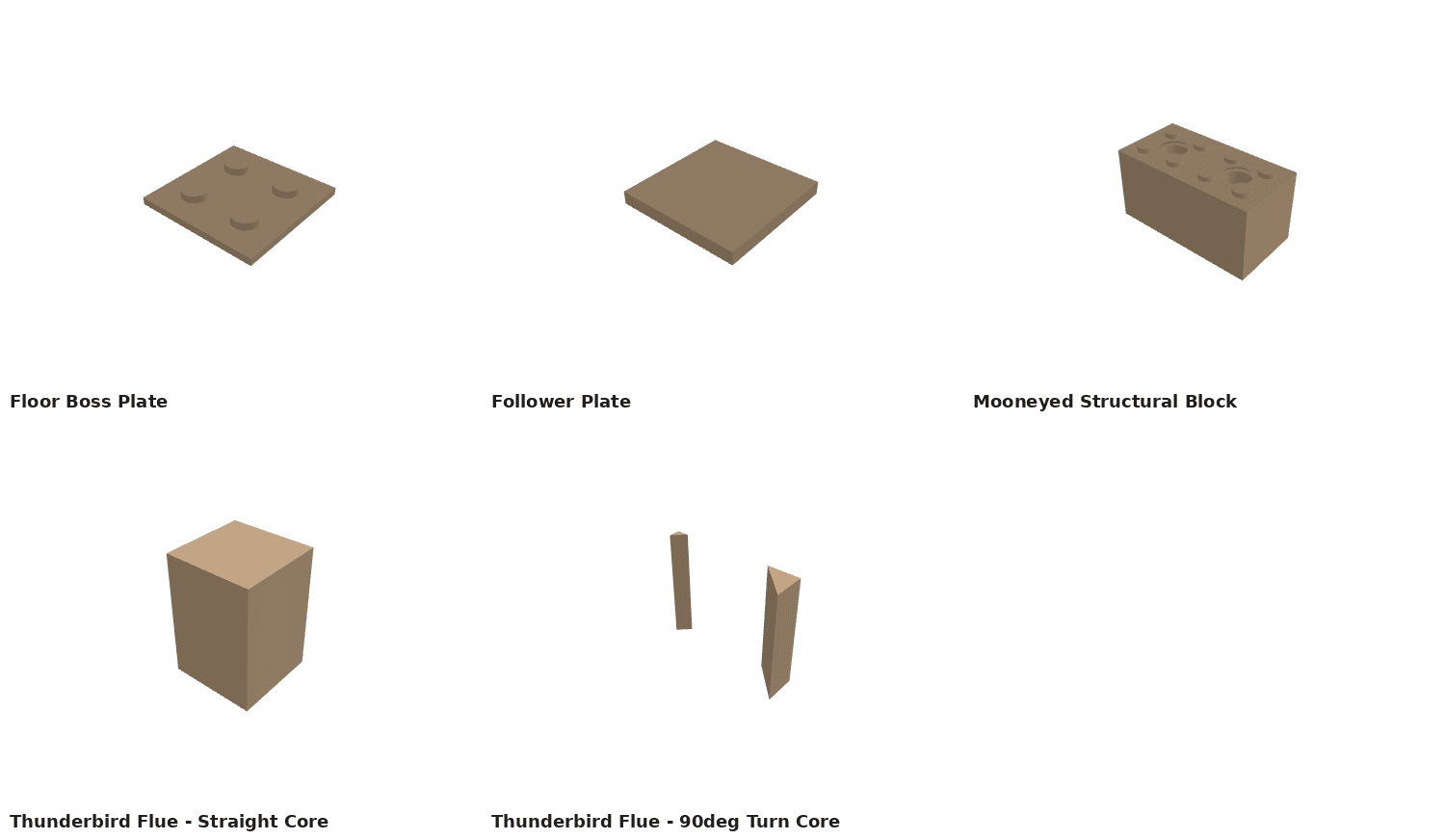
One interlocking stud/pocket grid under three cast unit shapes — brick, structural block, and rocket-mass-heater flue — so a wall, a footing, and a heater's flue all key into the same registration system.
Why the name
Named for the Melon Heads, the big-skulled, backwoods-dwelling figures of West Virginia and Ohio Valley legend. Fitting namesake for a masonry system whose whole design logic lives in what's hollowed out of each unit's head — cored channels doing the real work of weight reduction, rebar routing, and grout injection, empty space carrying as much of the design as the material around it.
Three cast unit shapes sharing one universal stud/pocket registration grid, each solving a different part of a masonry build: a base thermal-mass brick, a cored structural block, and rocket-mass-heater flue segments. All three cast from the same registration system, selectable between REFRACTORY and THINSET joint presets depending on the zone being built.
The Three Units
- Melonhead — the base interlocking brick mold: an 8"×8"×4" module cast in a knock-down melamine/plywood box, with two printed insert plates (a floor boss plate of raised registration studs, and a follower plate pressed into the wet pour to form matching studs plus frog grooves).
- Mooneyed — a better-engineered structural block: cored for weight reduction, keyed to the same universal stud/pocket pins so courses stack in perfect XY alignment, with its vertical cores doing double duty as a rebar chase and a top-down grout/thinset injection channel — no hand-buttering joints, pipe it in from above.
- Thunderbird — serpentine flue segments for rocket-mass-heater builds (see the Snawfus Hearth's RMH Prototype variant above): straight pulled-core segments, plus 90° turn segments cast from a genuinely different two-part mitered core, since a straight-pull core can't form a bend.
How They Interlock
The stud/pocket pins aren't the structural bond on any of these — mortar or grout carries the actual load throughout, same as ordinary masonry. Their real job is registration: keeping every course in the same XY alignment, course after course, so a block wall's cores stay one continuous straight column from top to footing, or a brick course lands square on the one below it.
Open Items
- Wood mold cavity oversize (for joint clearance) is a starting estimate — verify against your actual geopolymer/thinset mix's real cure shrinkage before a full run.
- Mooneyed block's rebar core is sized around a #4 (1/2") bar for grout to flow and consolidate — confirm against your actual reinforcement calc before load-bearing walls.
- Thunderbird flue channel is area-matched to 6" round stovepipe (5.5"×5.5" square, minor oversize for the added friction of square corners) — segment-to-segment joints rely on the mortar bed for the actual air seal, tongue/groove is alignment only.
- This is first-pass CAD for a new system — none of it has been through the panel-by-panel interference verification the Ogopogo connector standard already has.