Wild Forage
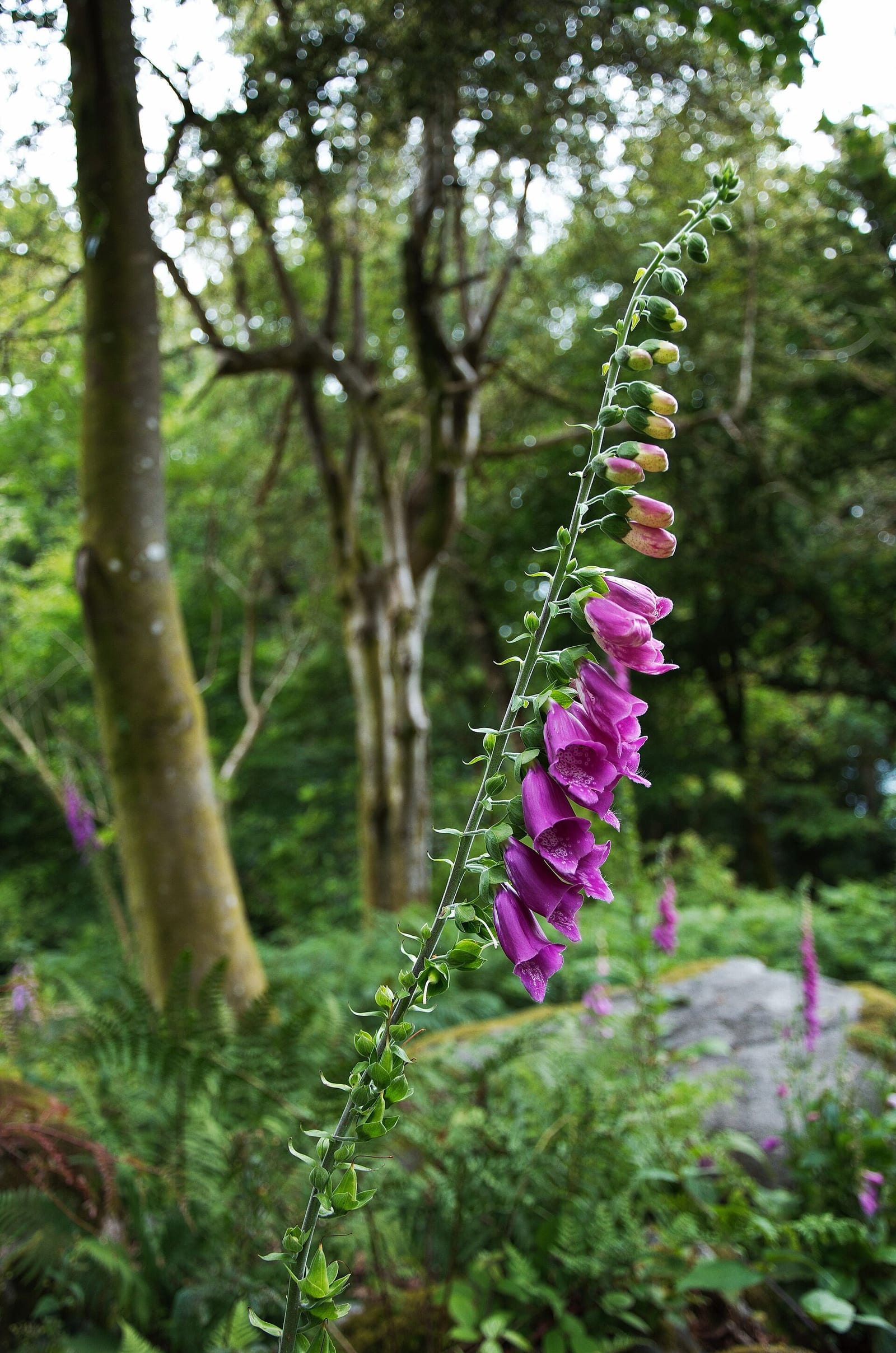
Foxglove
Digitalis purpurea
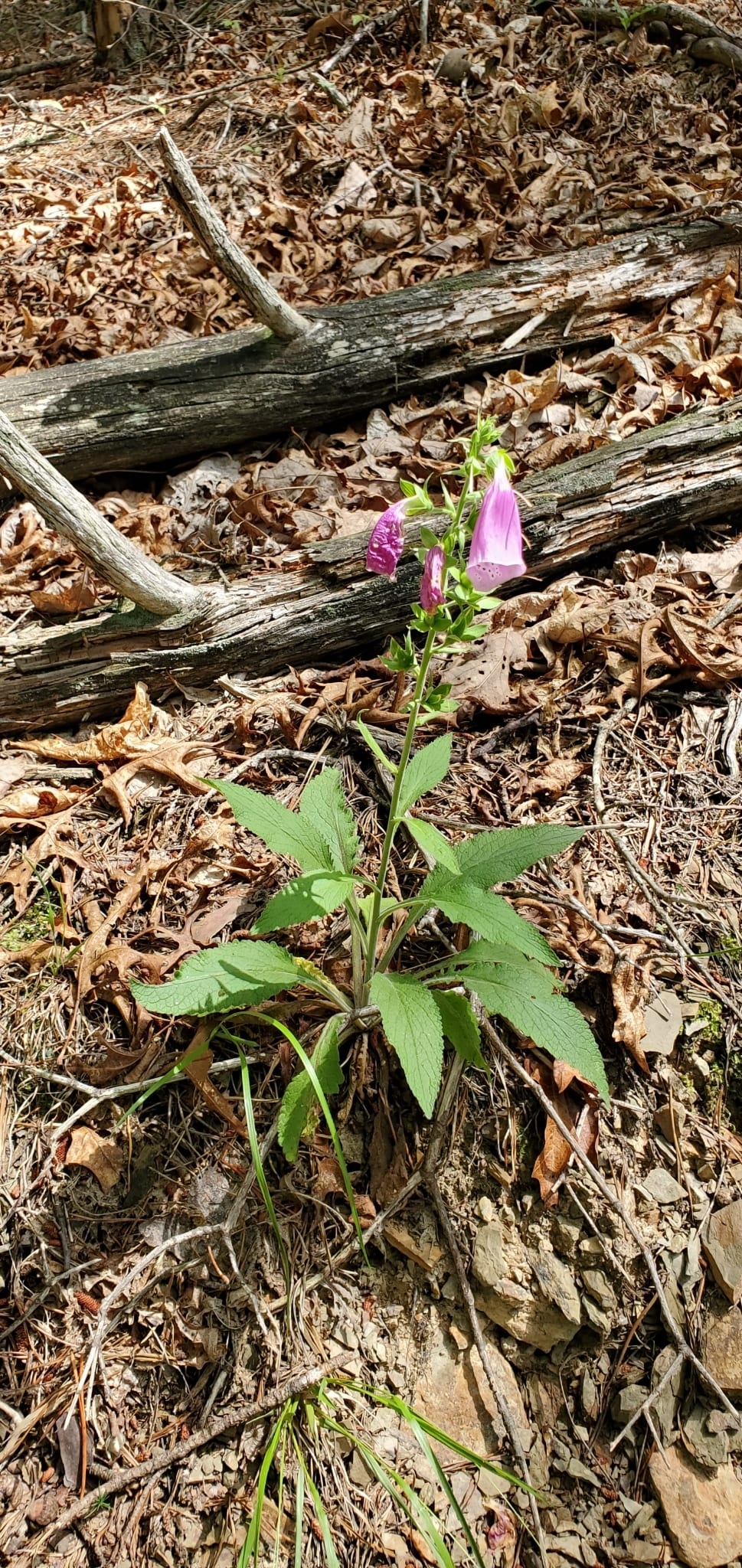
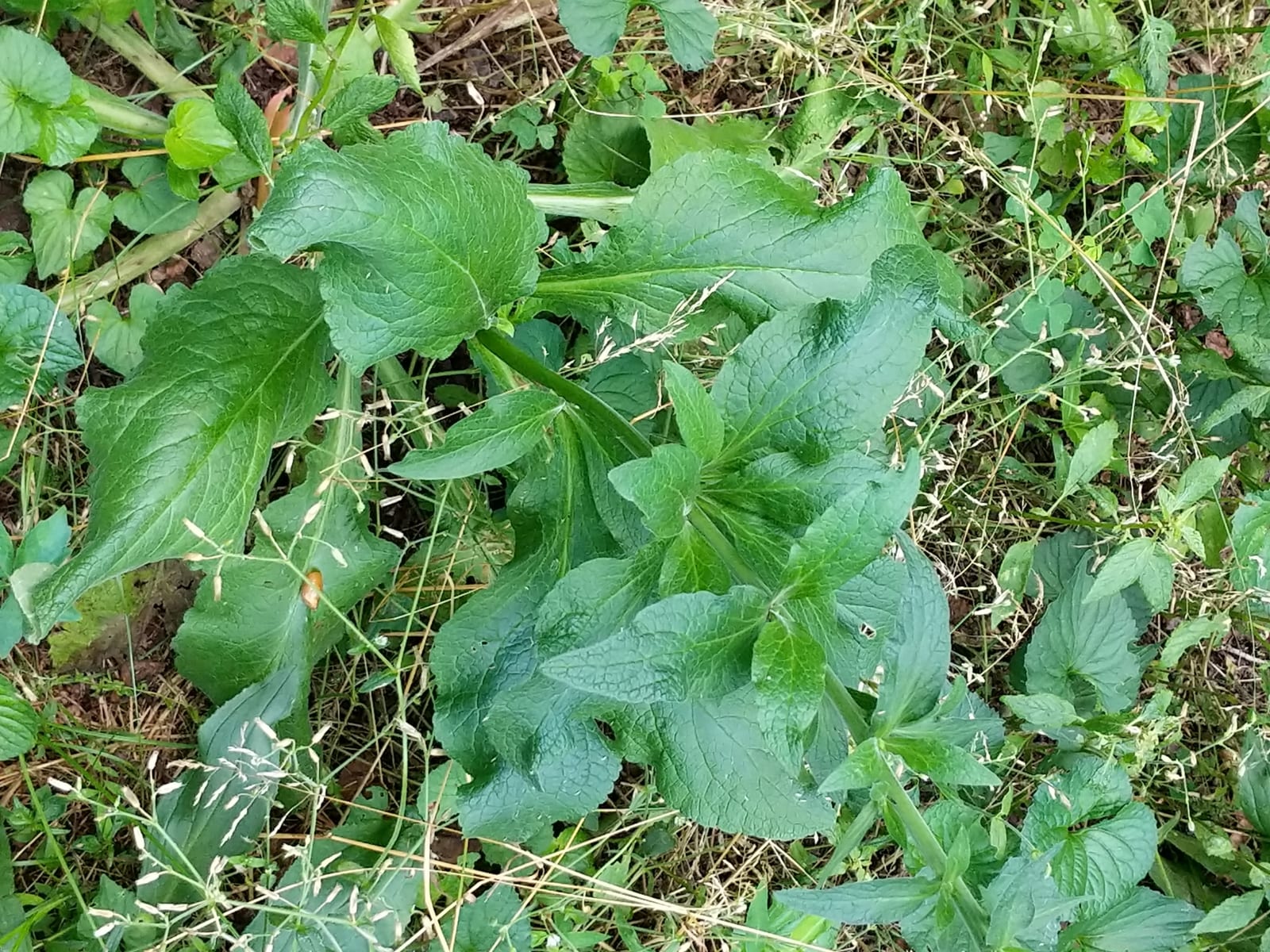
Heart-toxic garden escape. The first-year rosette is often mistaken for plantain or comfrey.
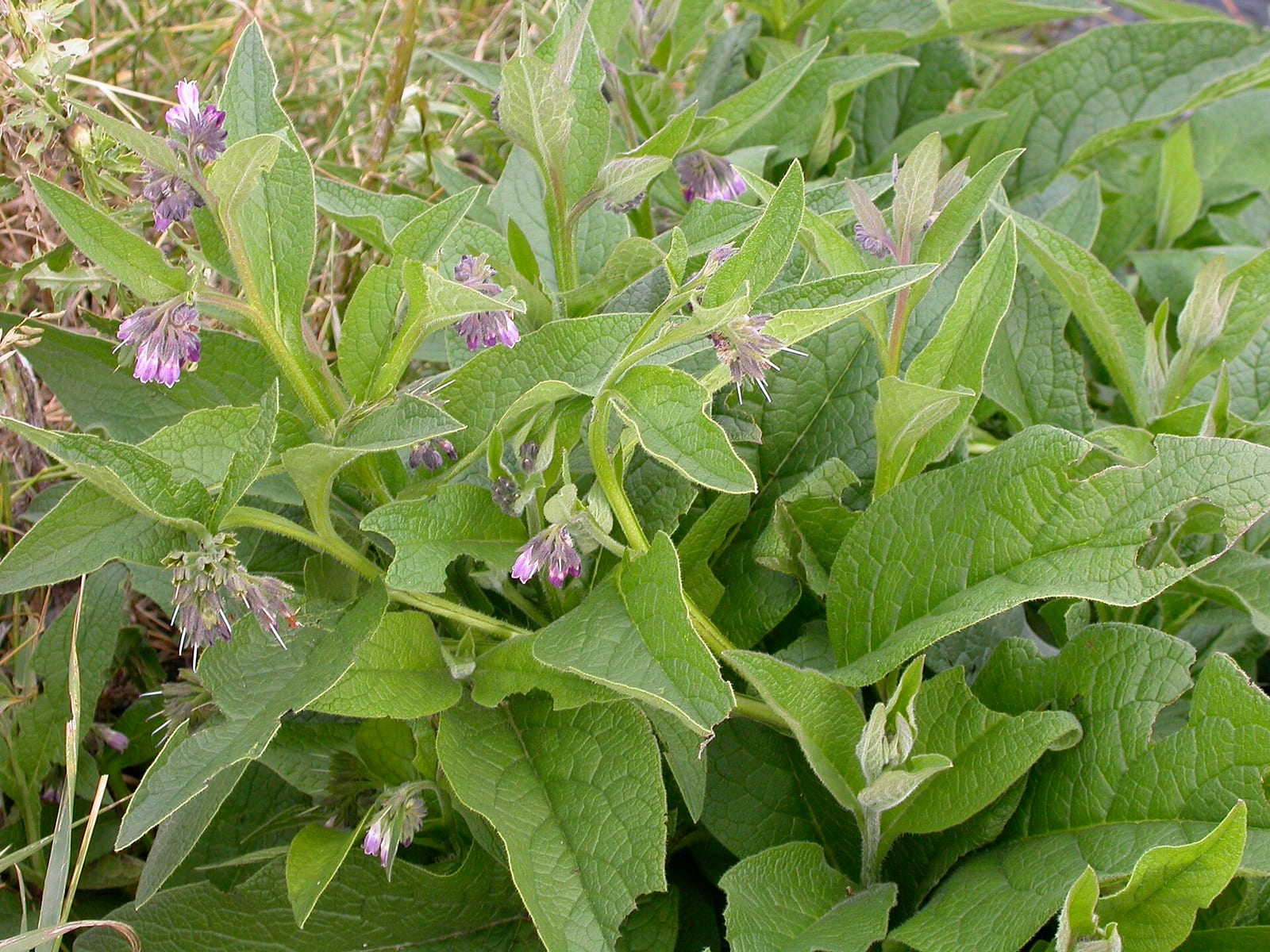
Key features
- First-year rosette of soft, downy, wrinkled gray-green leaves with scalloped edges
- Netted veining, no parallel ribs and no stringy fibers when torn
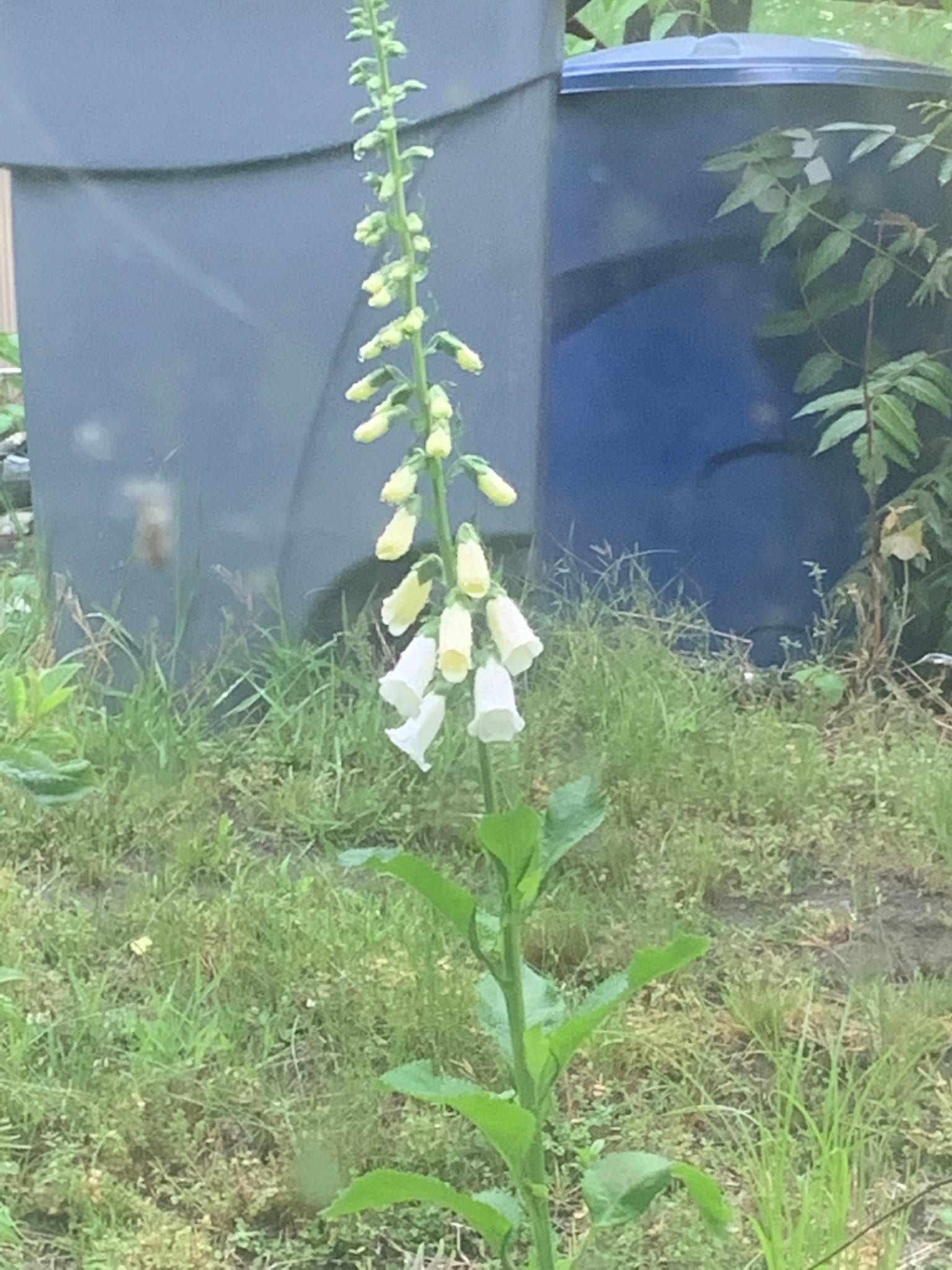
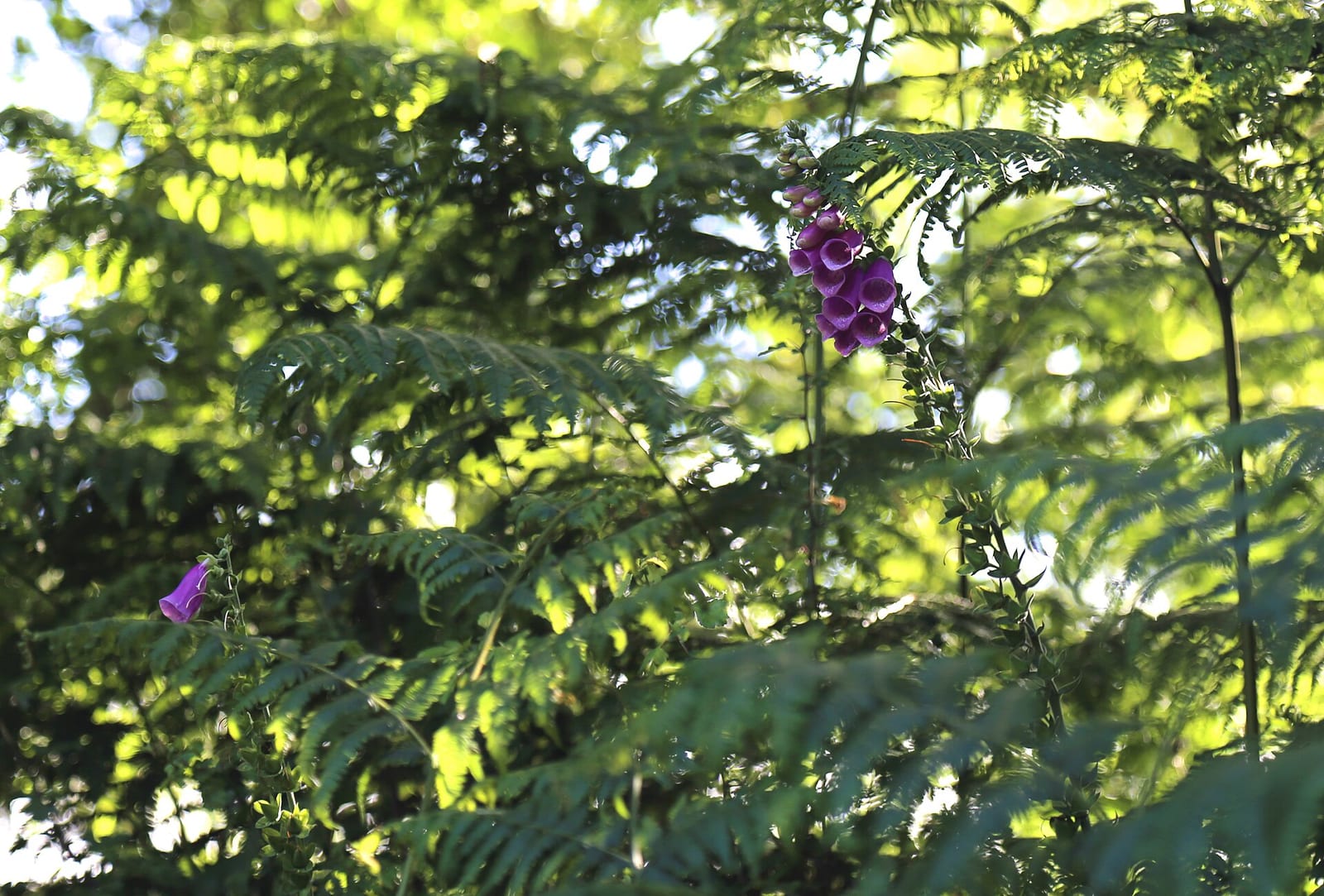
- Second year: 3-5 ft spike of tubular purple, pink or white bells (June)
- Often near old homesites and gardens
What it gets mistaken for
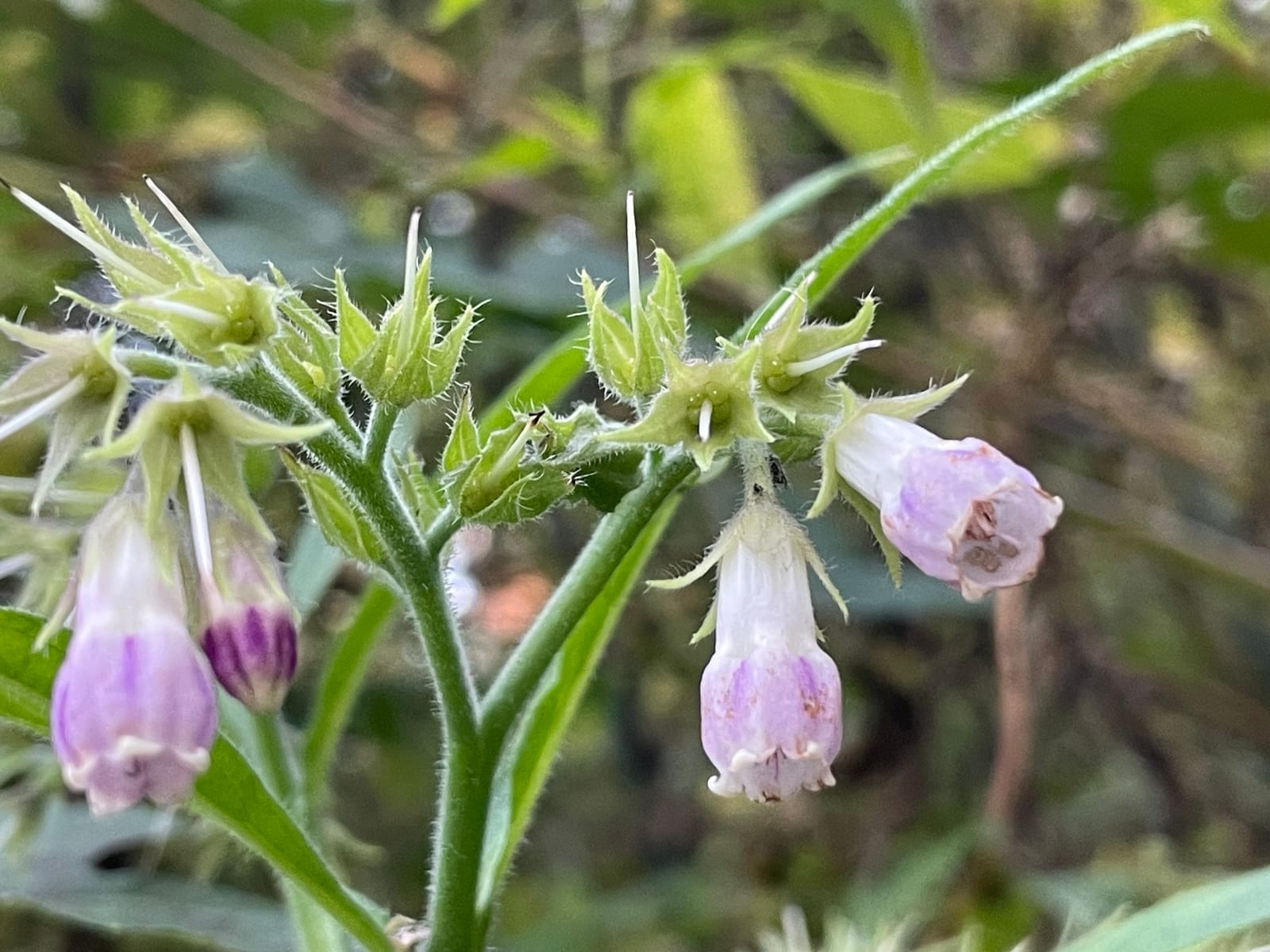
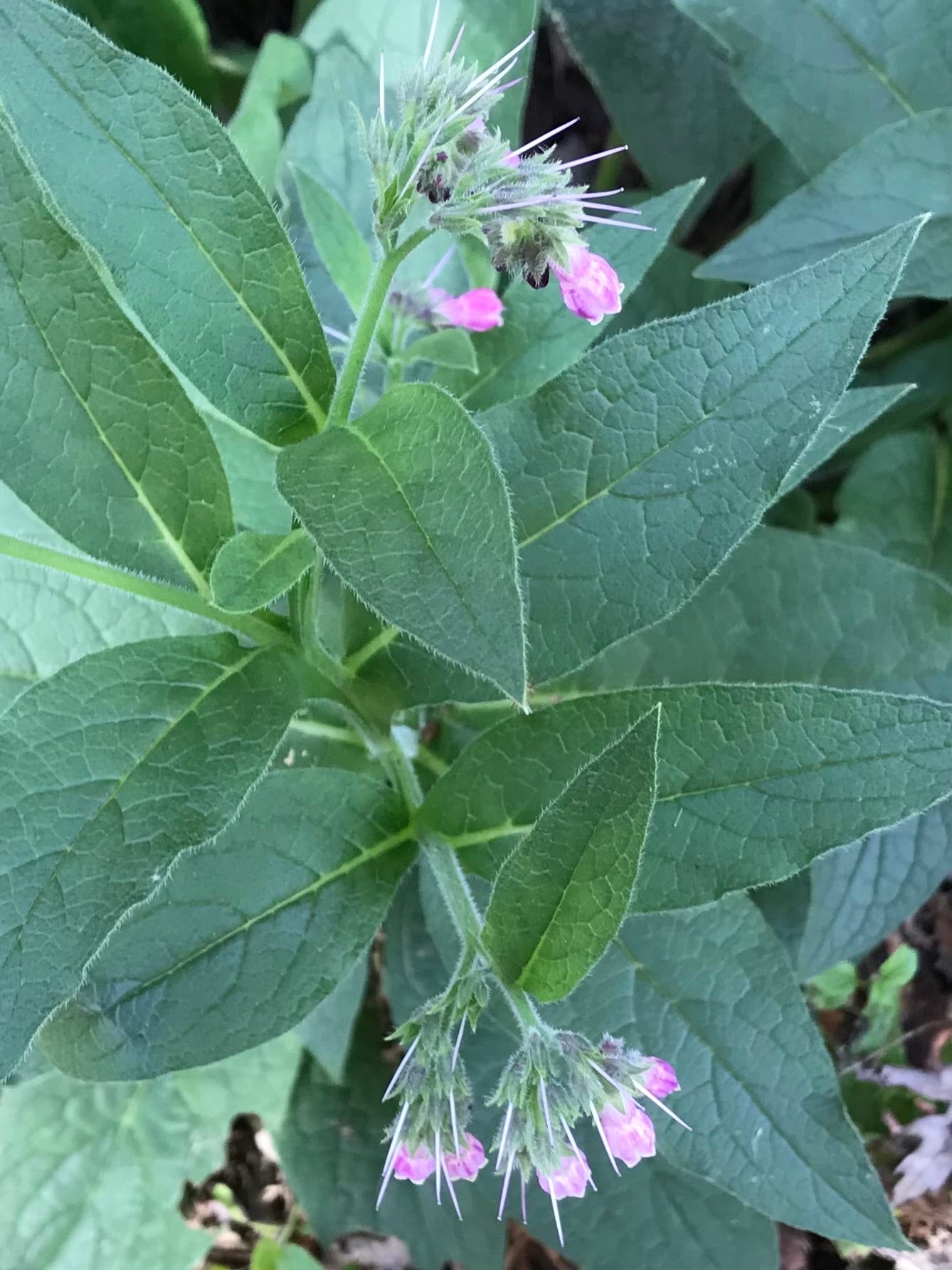
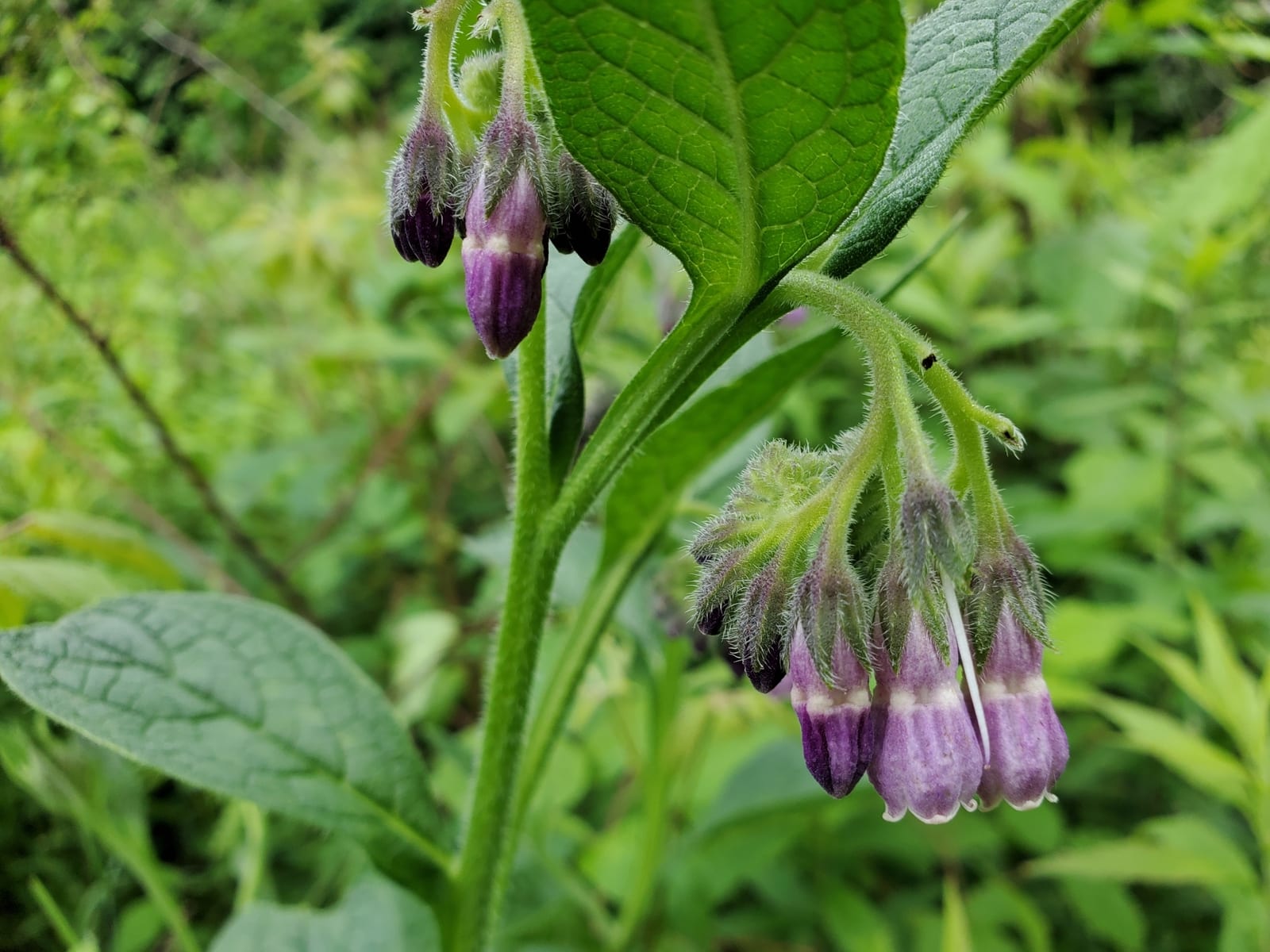
- ComfreyToxic
Coarse, bristly hairs; not advised as food.
- Broadleaf plantainHarmless
5-7 parallel ribs and celery-like strings when torn.
See the card → - MulleinHarmless
Very thick, woolly, silver-gray rosette with no scalloping. Not eaten as a food; leaves and flowers are used for tea, and the seeds are toxic.
Warnings
- If eaten, call Poison Control at 1-800-222-1222 or 911.
In season
April, May, June, July, August
Biennial: rosette in year one, flower spike in year two.
Habitat
Old homesites, roadside edges, gardens, disturbed ground.
Educational reference only. Never eat a wild plant or mushroom based on a website or app. Confirm with an experienced forager, your local extension office, or a mycological club. Poison Control (US): 1-800-222-1222. Call 911 for severe symptoms.