Mushrooms
False morels
Gyromitra spp.
Also called: brain mushroom
Toxic spring mushrooms with brainlike caps that fruit at the same time as true morels.
Key features
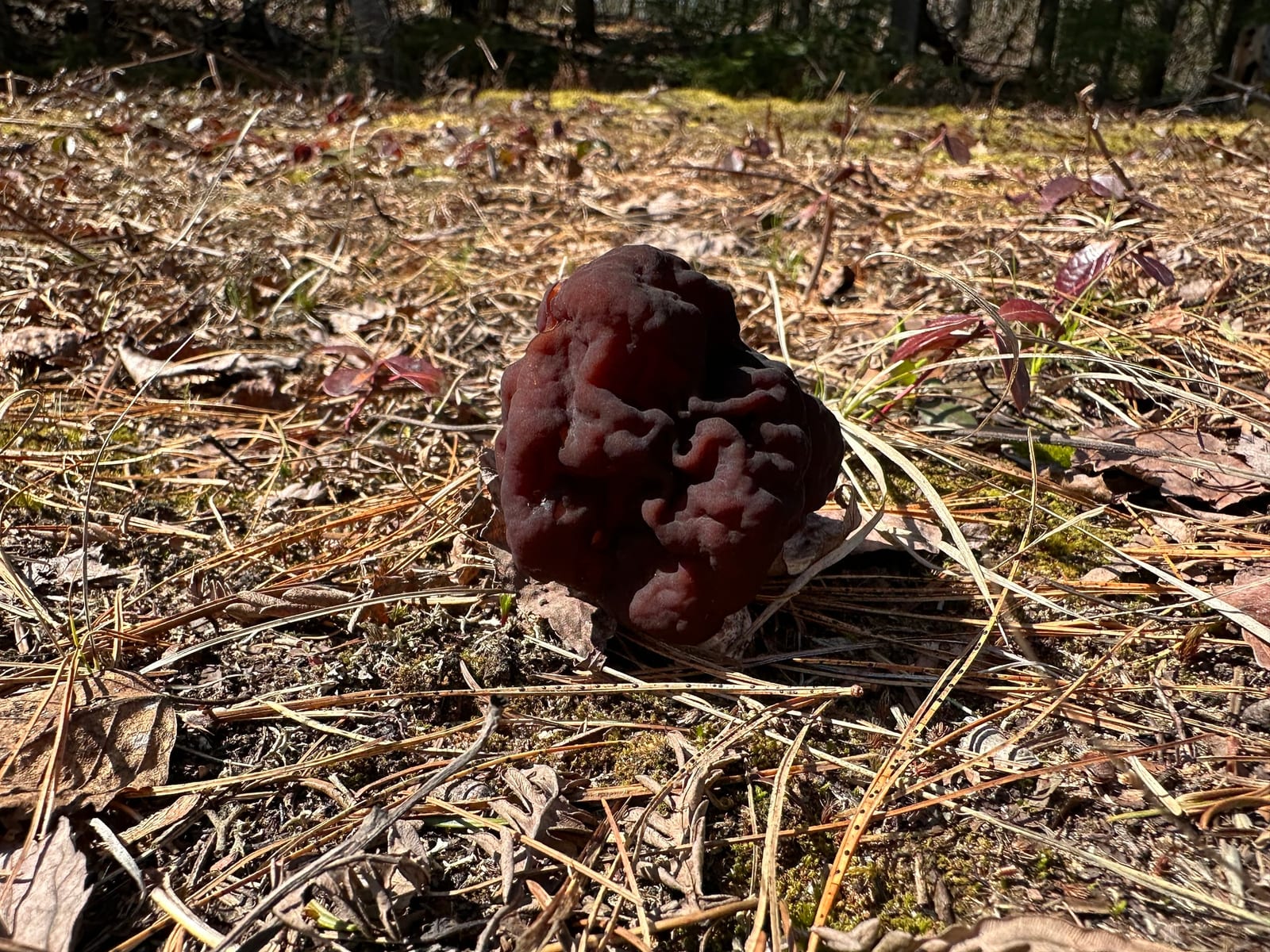
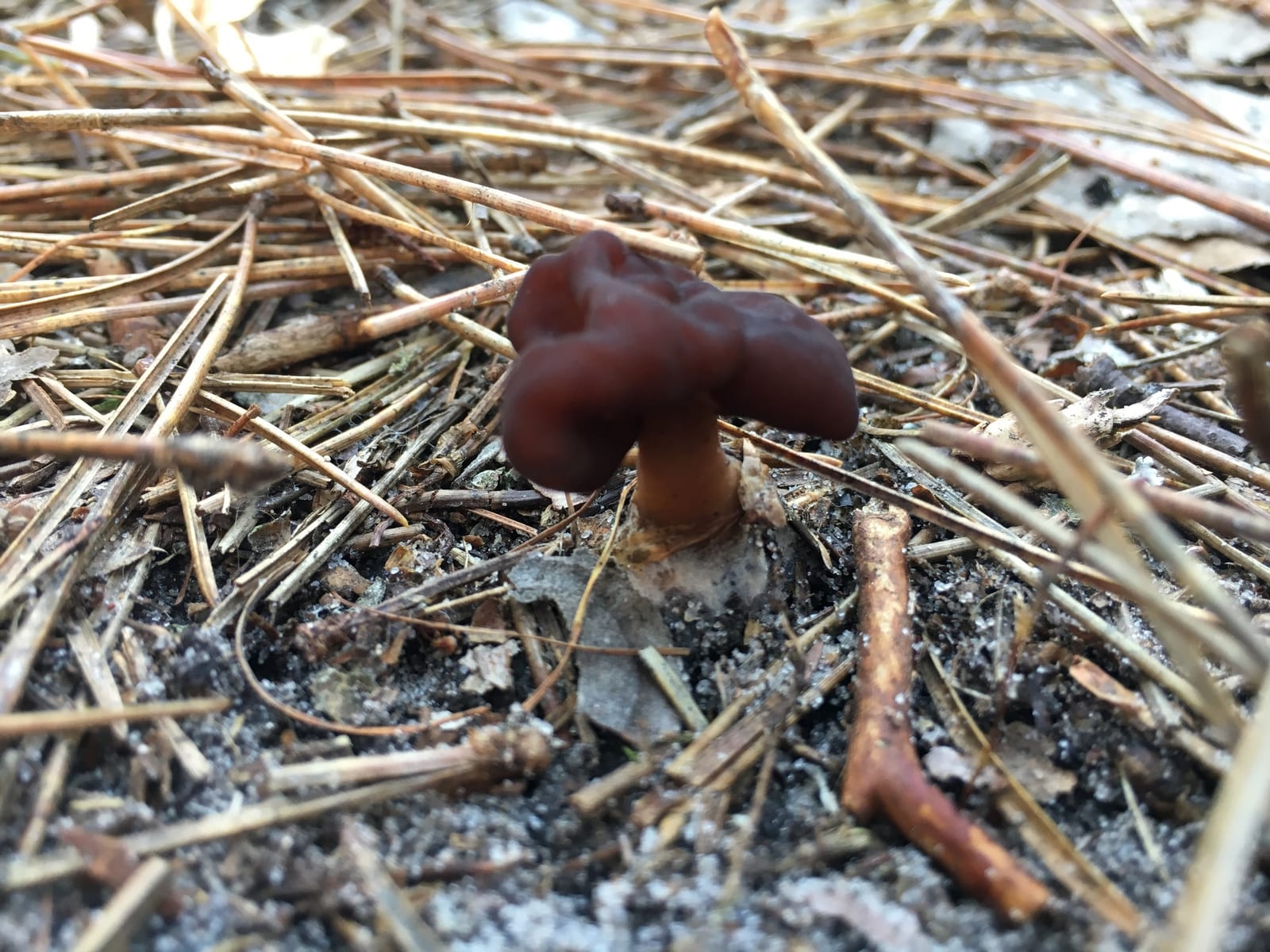
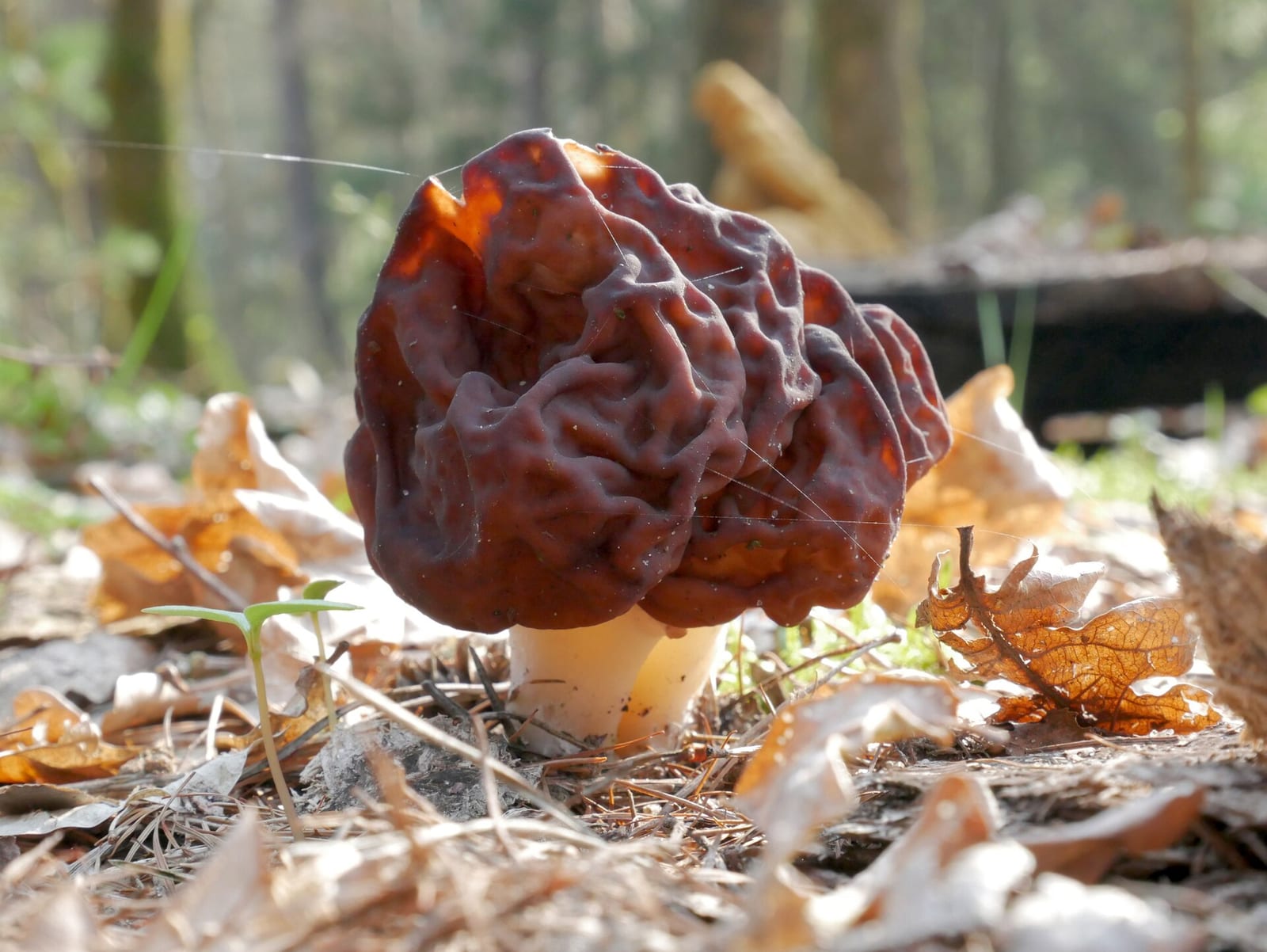
- Wrinkled, lobed, brainlike cap (not honeycomb pits): the surface bulges outward in folds and flaps instead of being pitted inward
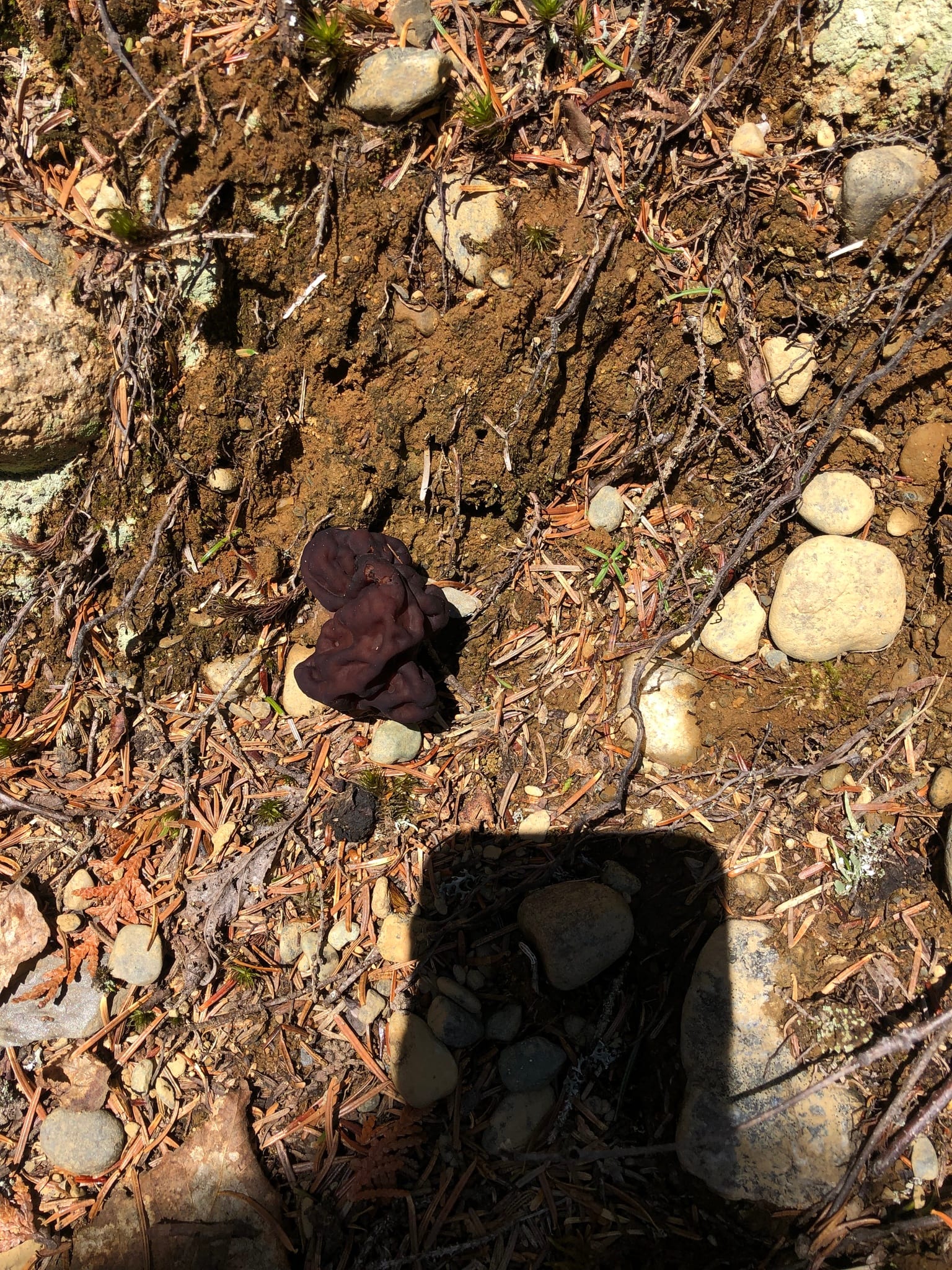
- Reddish-brown to dark brown color
- Cut lengthwise: chambered or cottony inside, not one hollow chamber
- Cap hangs free from the stem in folds
What it gets mistaken for
- True morelsHarmless
Honeycomb-pitted cap, completely hollow from tip to base.
See the card →
Warnings
- Contains toxins that can be fatal even after cooking. If eaten, call Poison Control at 1-800-222-1222 or 911.
- Some cultures parboil false morels, but the toxin (gyromitrin, which converts to monomethylhydrazine) is volatile and can be inhaled while cooking. Do not trust any 'safe preparation' claim.
- Some people eat false morels and seem fine, but the toxin can build up in the body over time. A mushroom that sickens some people and not others is not a safe one.
In season
April, May, June
Spring, often slightly earlier than or alongside true morels.
Habitat
Woods, often under conifers and on disturbed soil.
Field traits
- Grows on
- soil
- Underside
- brain-like folds
- Spore print
- cream to pale ocher
Educational reference only. Never eat a wild plant or mushroom based on a website or app. Confirm with an experienced forager, your local extension office, or a mycological club. Poison Control (US): 1-800-222-1222. Call 911 for severe symptoms.