Mushrooms
Turkey tail
Trametes versicolor
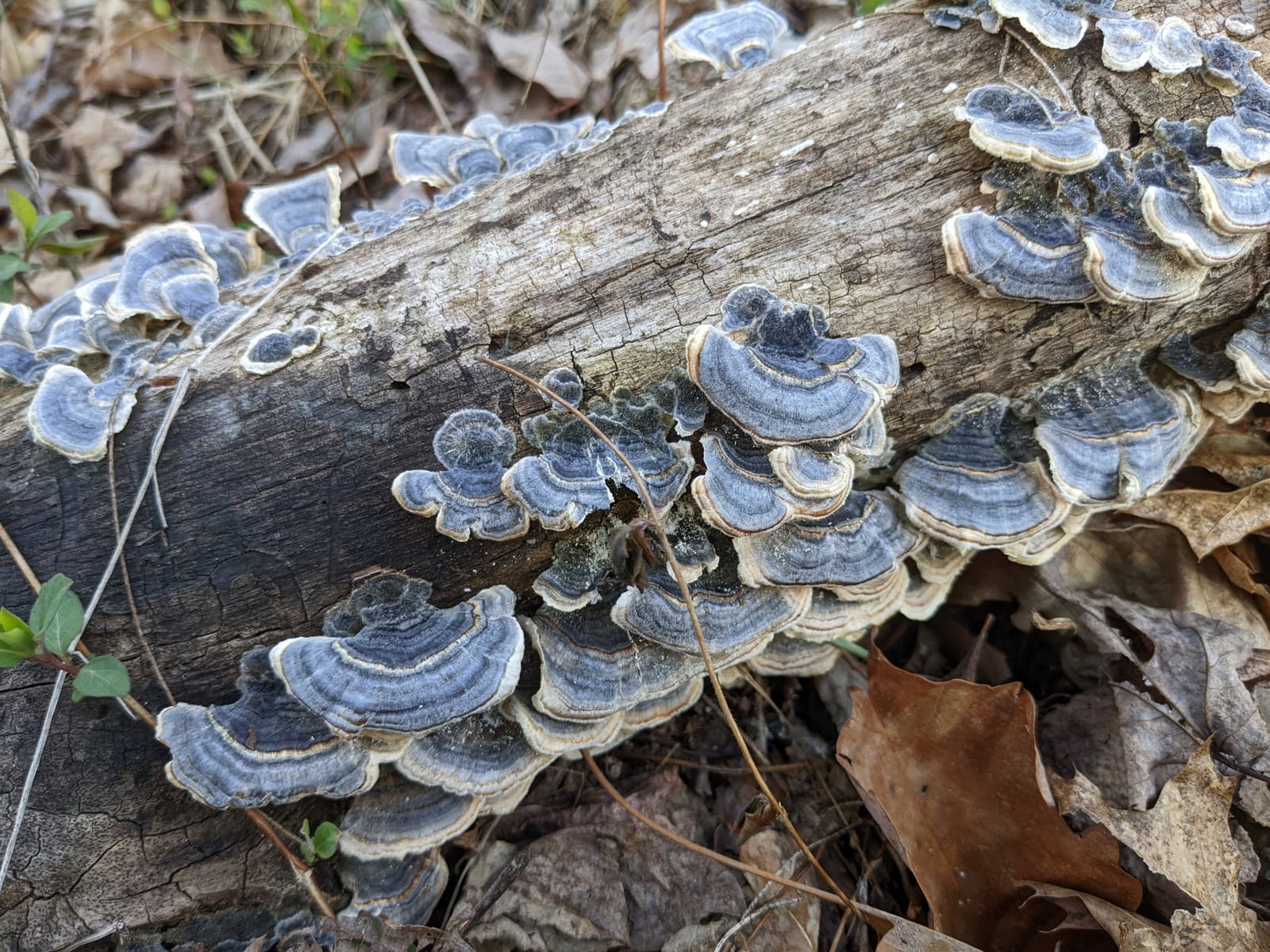
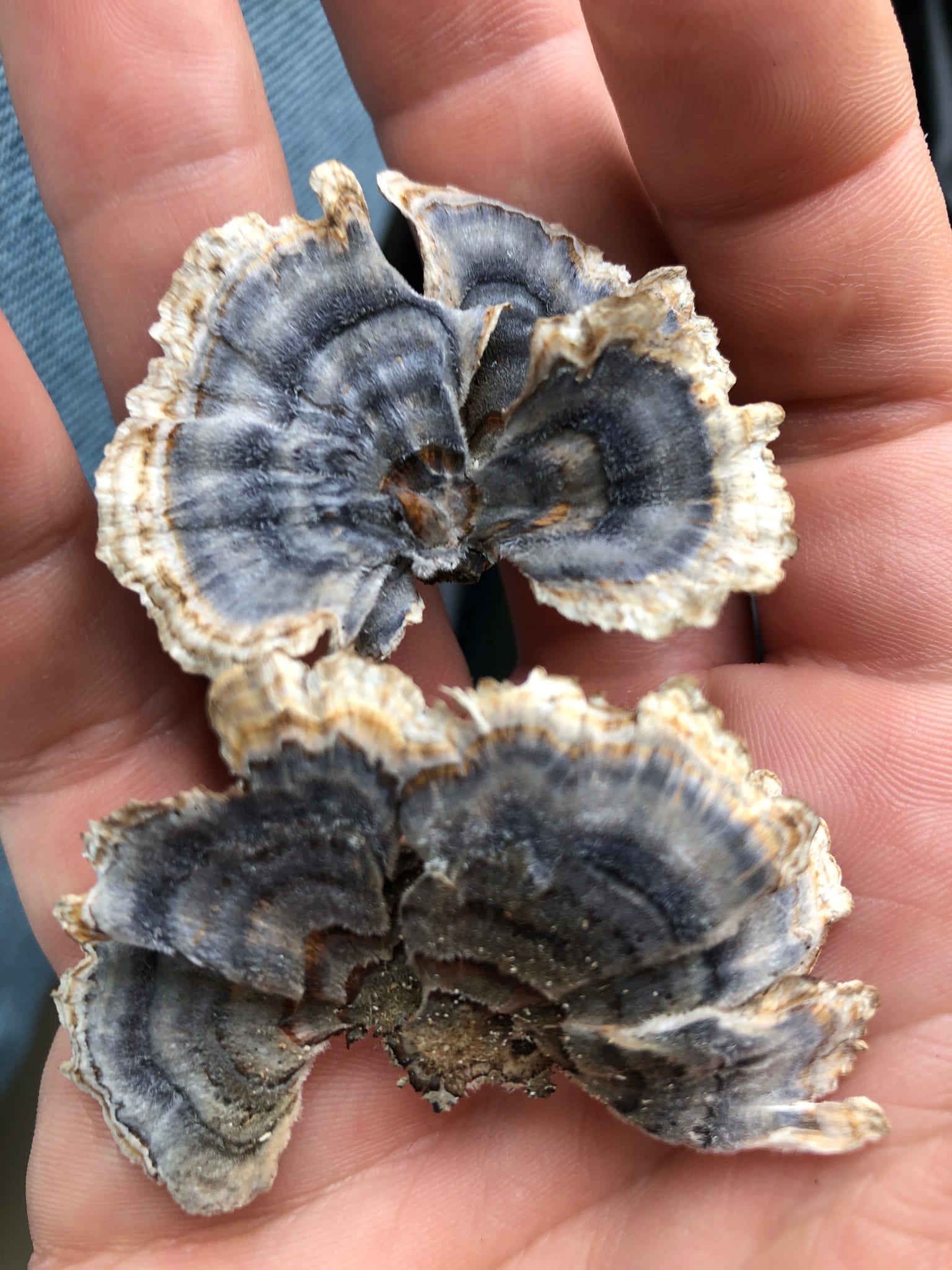
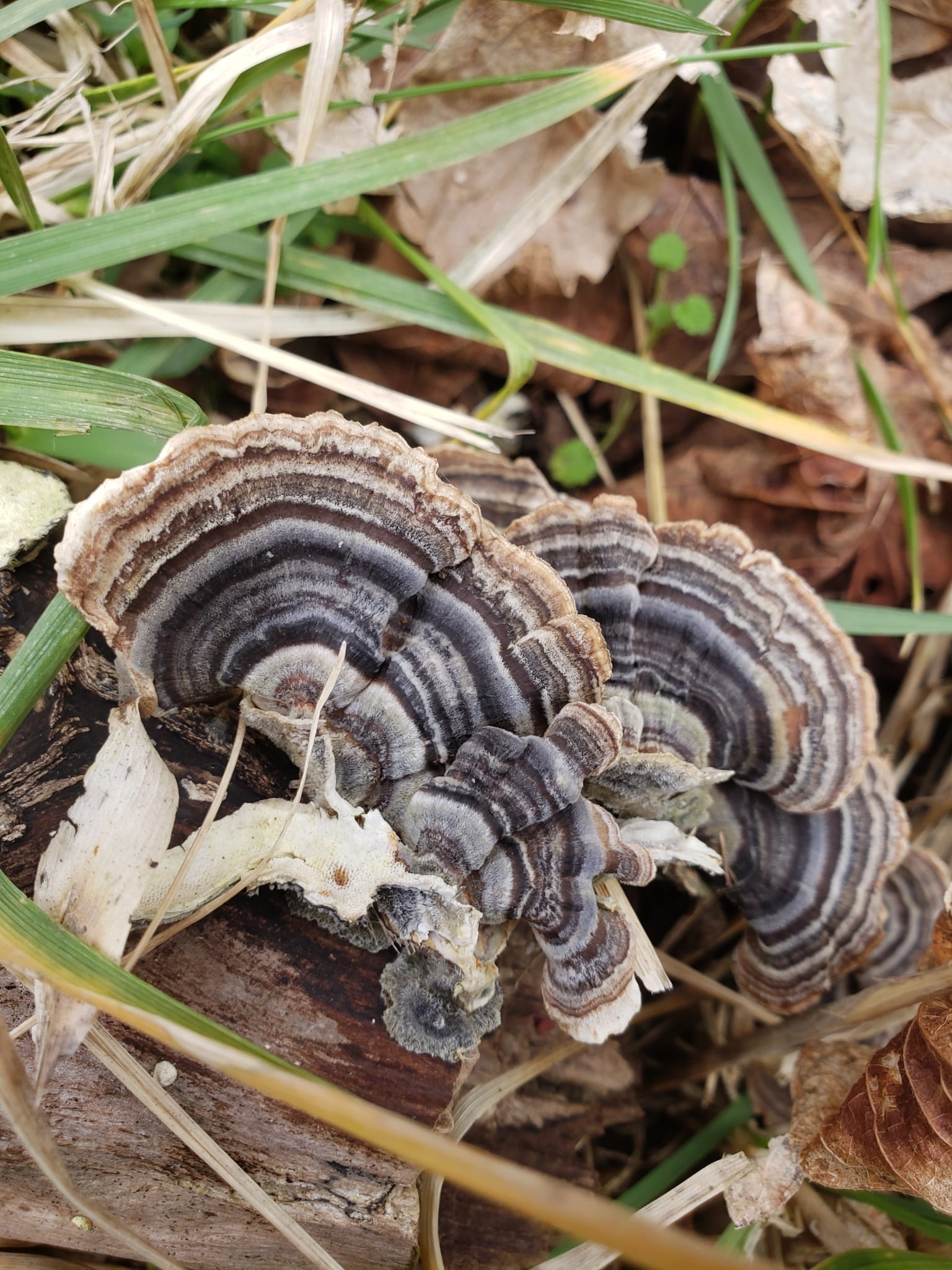
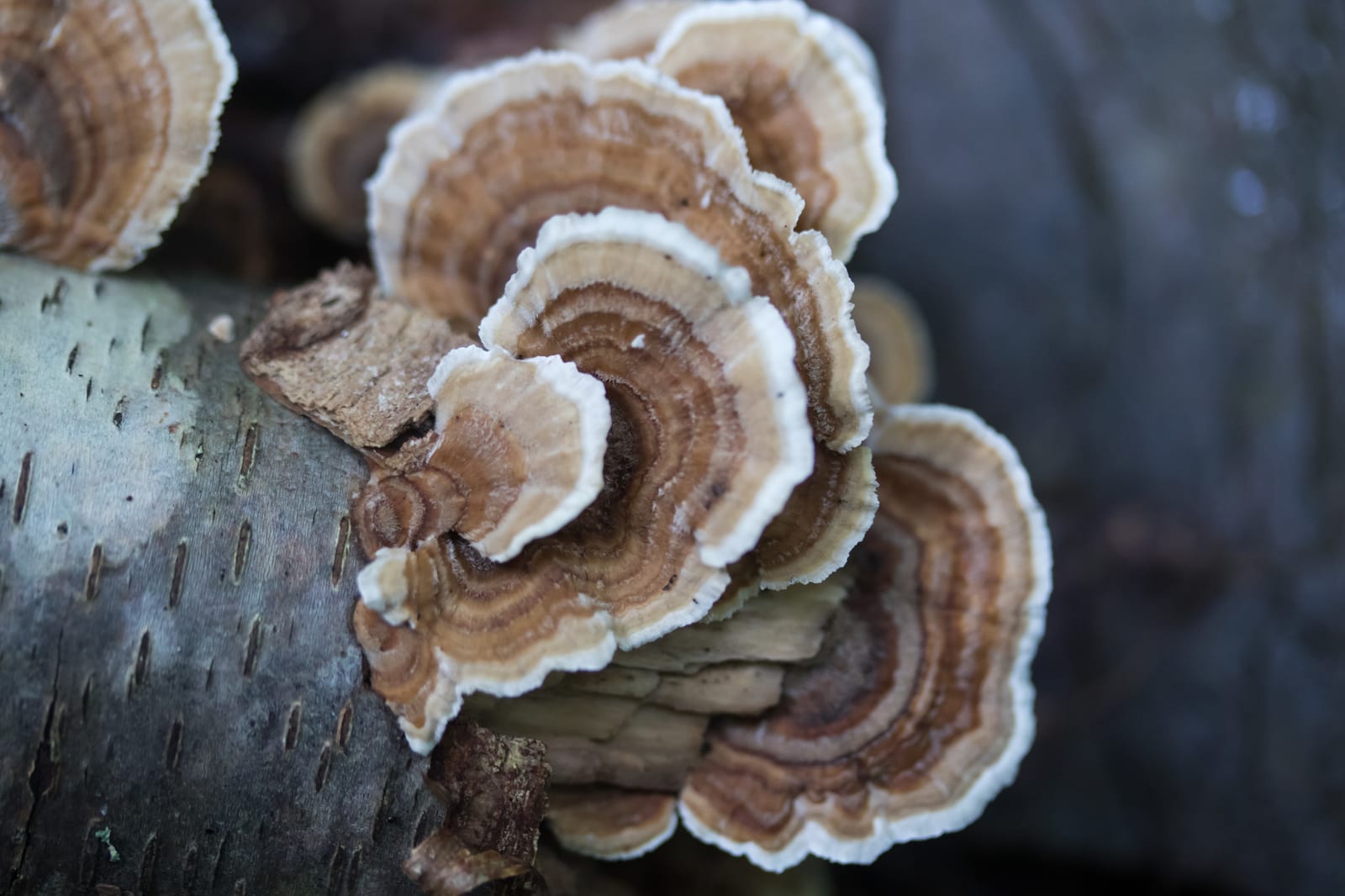
Thin, banded, leathery fans on dead hardwood. Too tough to eat; used simmered as a tea.
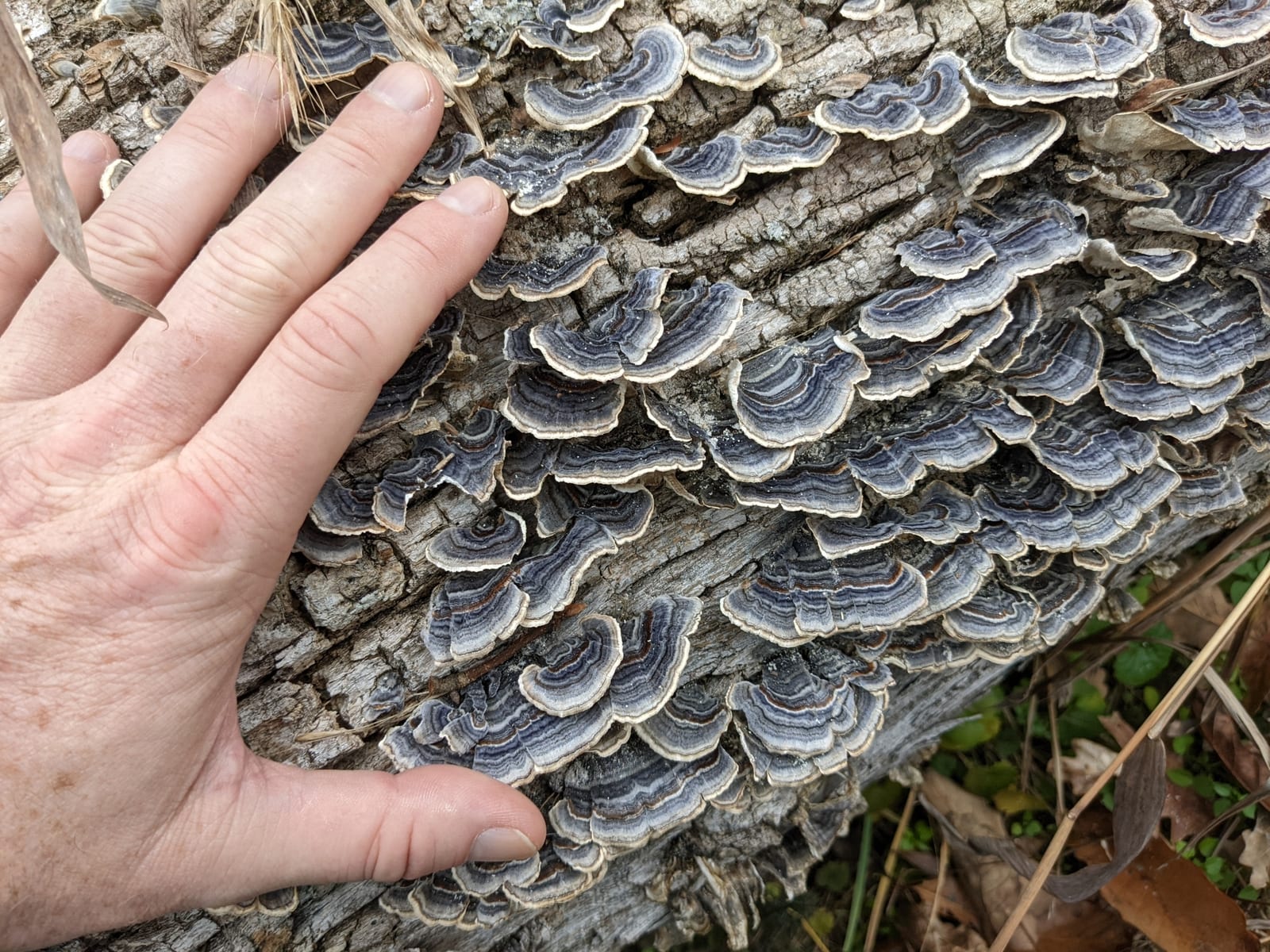
Confirm EVERY point before you eat it
0 of 4 confirmed. If any point does not match, it is not this plant.
Look-alikes to rule out
- False turkey tail (Stereum ostrea)Harmless
Smooth underside with no pores, more orange-rust bands.
- Violet-toothed polyporeHarmless
Violet pore edge and jagged teeth; not the same species.
In season
All year
Persists through the year; freshest from late summer on.
Habitat
Dead hardwood logs, stumps and branches.
Parts used
whole fruit body, simmered
Preparation and use
Simmer in water for tea (about 30-60 minutes). Avoid making health claims on the public card.
Harvest note
Harvest from clean, unpolluted wood.
Field traits
- Grows on
- dead hardwood
- Underside
- tiny pores
- Spore print
- white
Educational reference only. Never eat a wild plant or mushroom based on a website or app. Confirm with an experienced forager, your local extension office, or a mycological club. Poison Control (US): 1-800-222-1222. Call 911 for severe symptoms.