Wild Forage
Lily of the valley
Convallaria majalis
Toxic to the heart. Grows in dense colonies around old homesites and also wild in Appalachian mountain forests, and is a known ramp look-alike.
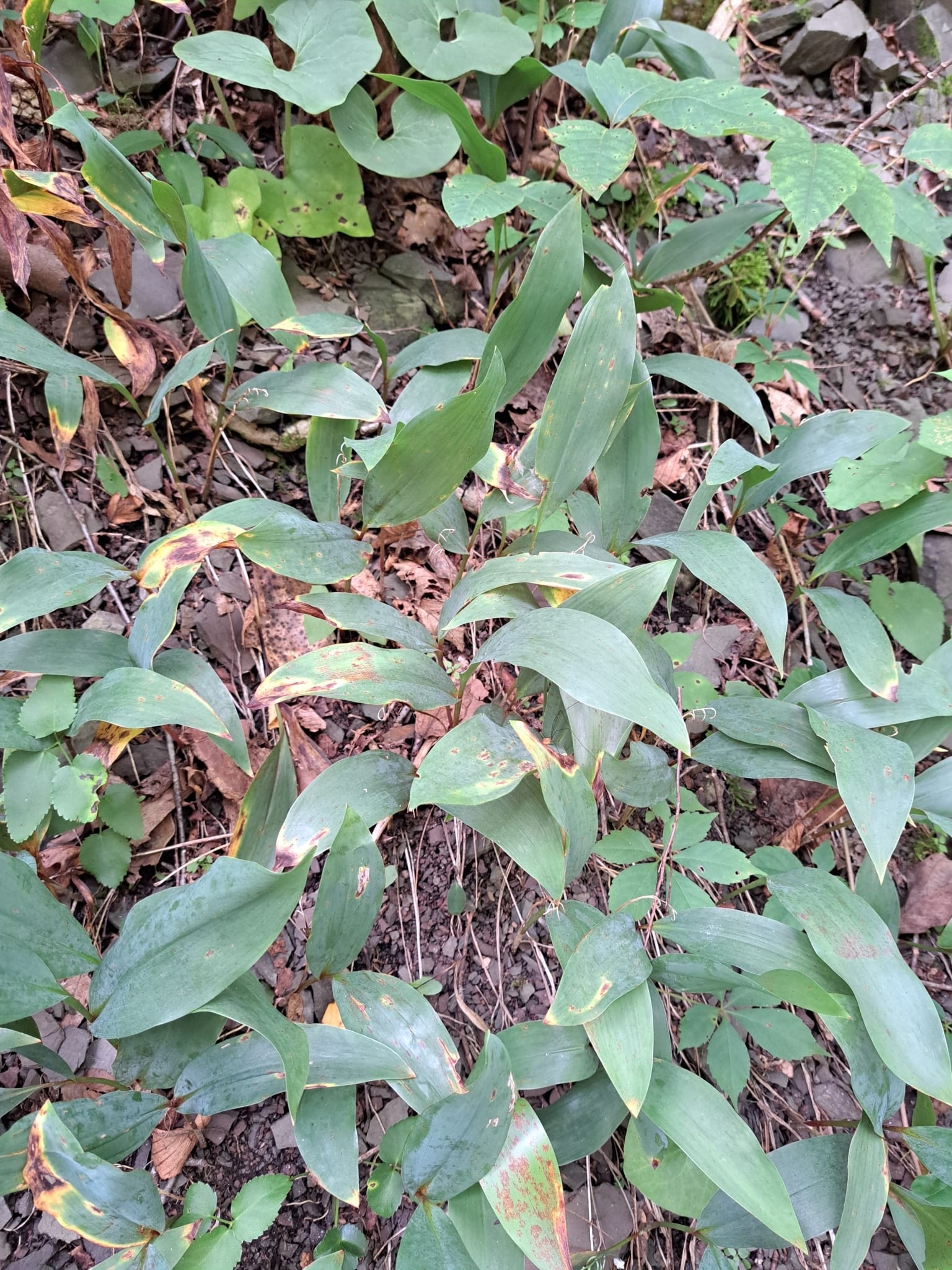
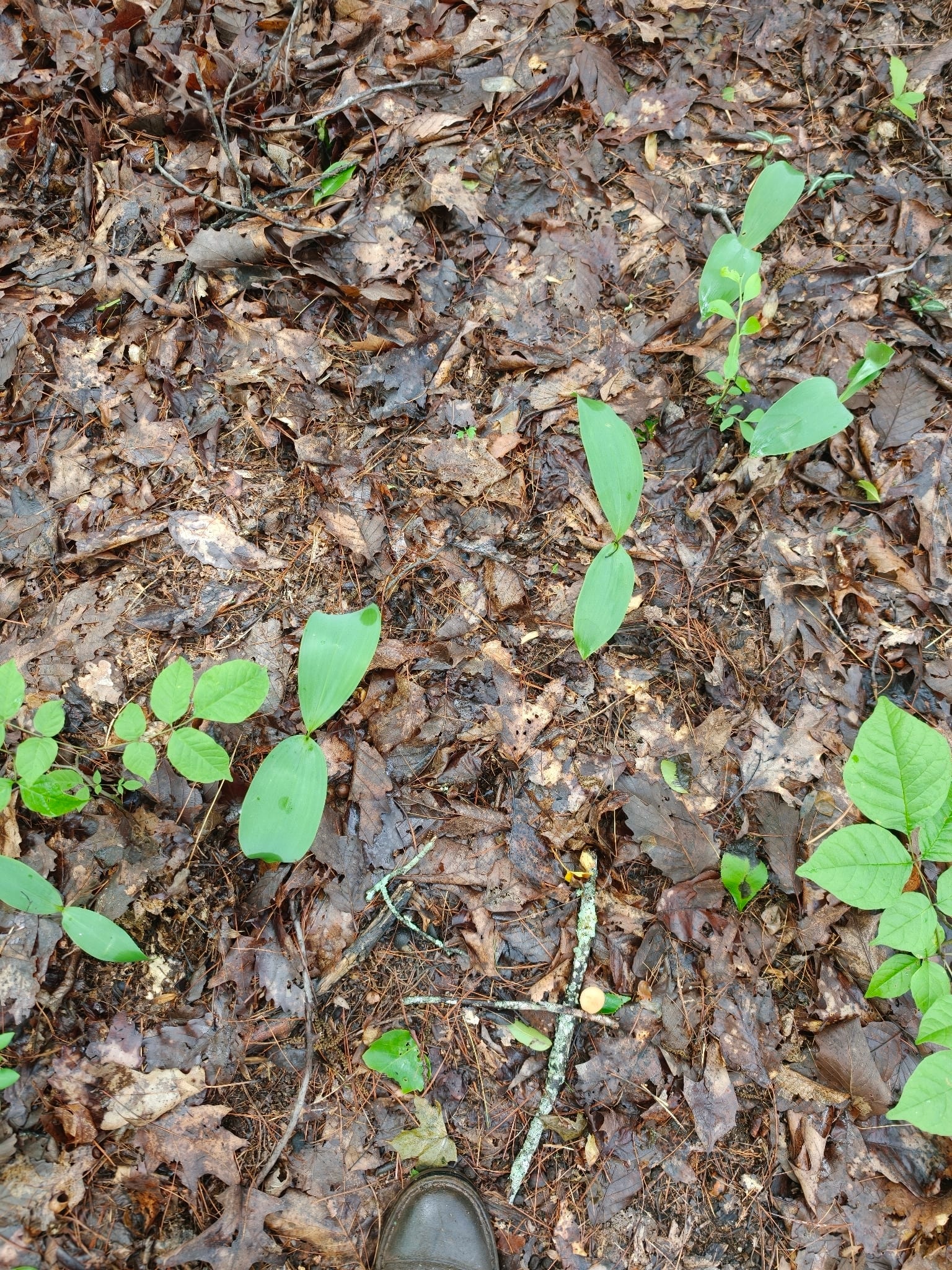
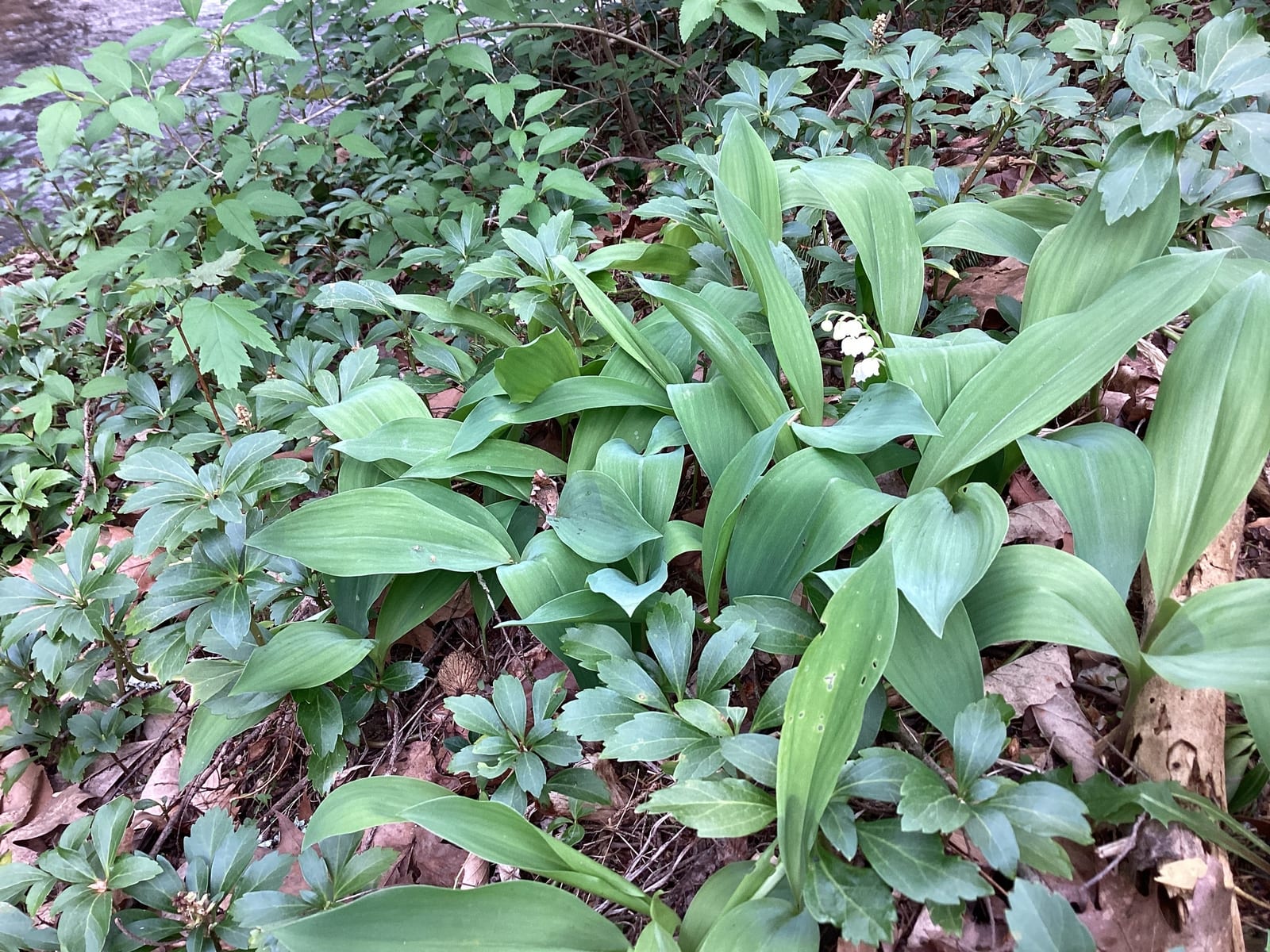
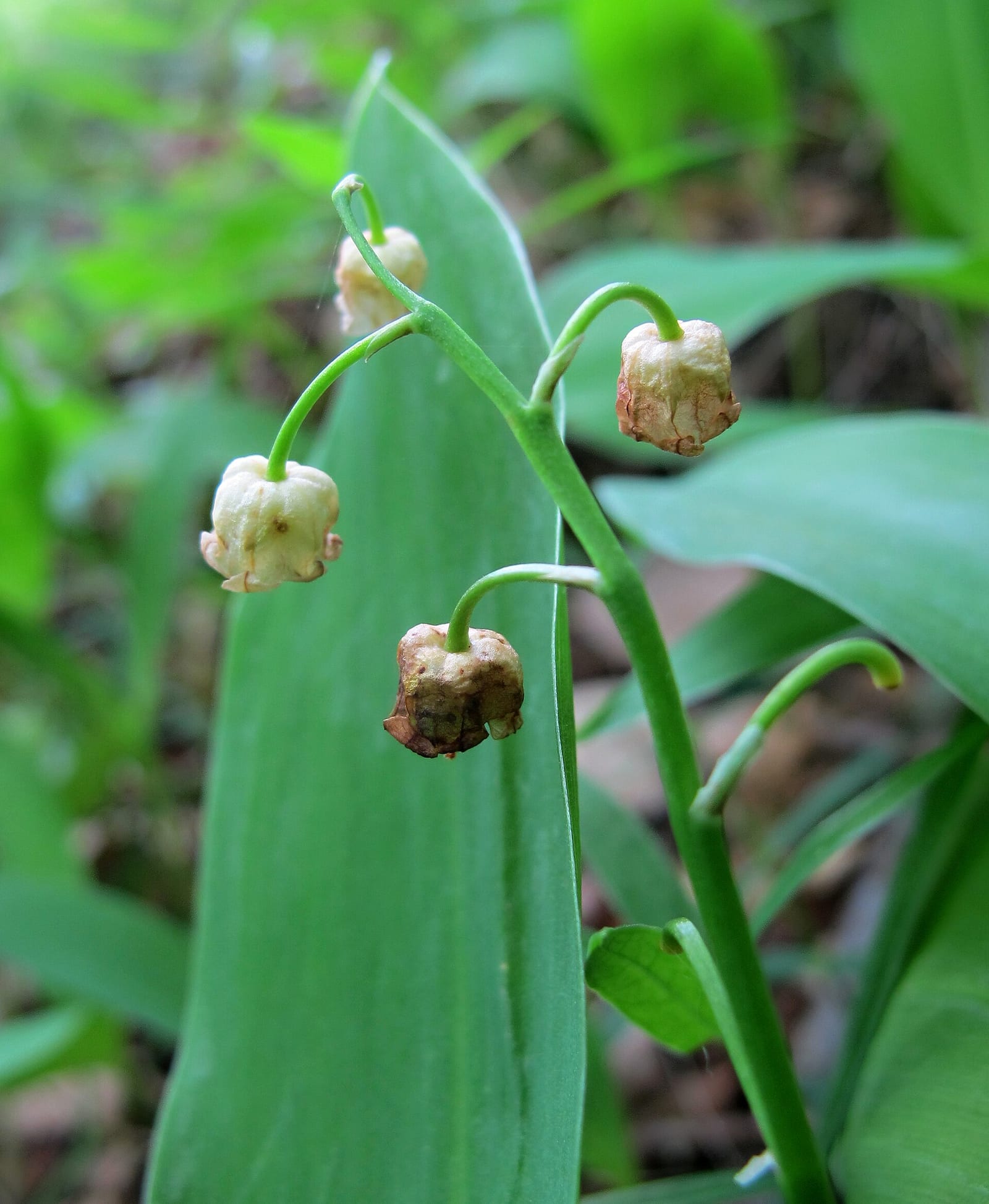
Key features
- Two (sometimes three) smooth, upright, oval leaves from the base, one wrapped around the other
- Arching stalk of small, fragrant white bells in May; orange-red berries later
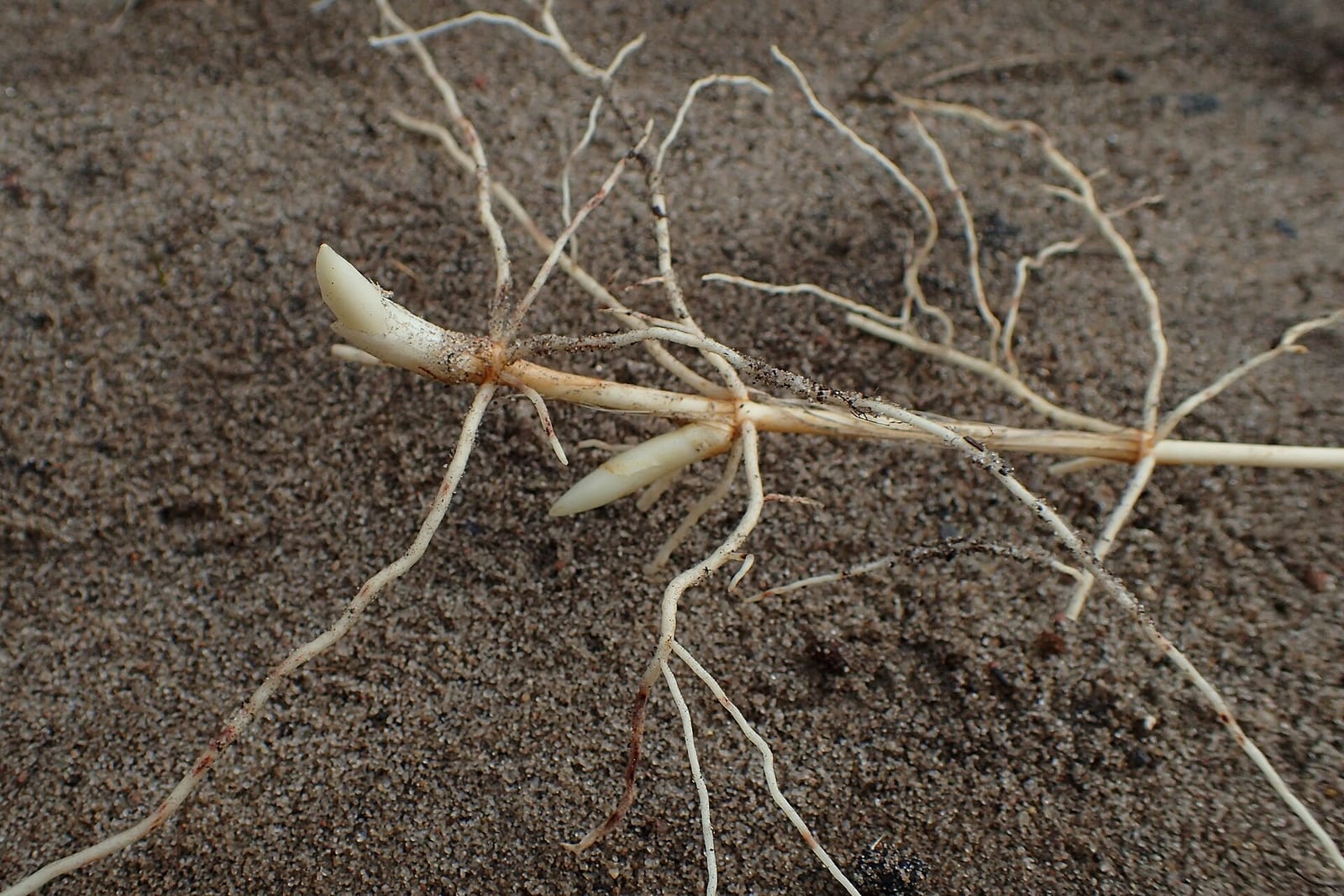
- Spreads in dense colonies by rhizomes
- No onion or garlic smell of its own
What it gets mistaken for
- RampsHarmless
Ramp leaves are flatter and broader and smell of onion. But scent from your hands can transfer to look-alike leaves, so never rely on smell alone.
See the card →
Warnings
- All parts contain heart-affecting compounds. If eaten, call Poison Control at 1-800-222-1222 or 911.
- Do not rule it out by habitat. A native American species grows wild in rocky mountain woods in West Virginia, not just around old homesites.
In season
April, May, June, July
Emerges early spring; fragrant flowers in May; red berries later.
Habitat
Old homesites, gardens and roadside plantings (the European species), and also wild in mountain forests and rocky ridgetop woodlands in WV and the southern Appalachians (the native American species, often far from any homesite).
Educational reference only. Never eat a wild plant or mushroom based on a website or app. Confirm with an experienced forager, your local extension office, or a mycological club. Poison Control (US): 1-800-222-1222. Call 911 for severe symptoms.