Poison hemlock
Conium maculatum
Deadly. Every part is poisonous. Often mistaken for wild carrot, parsley or other umbel plants.
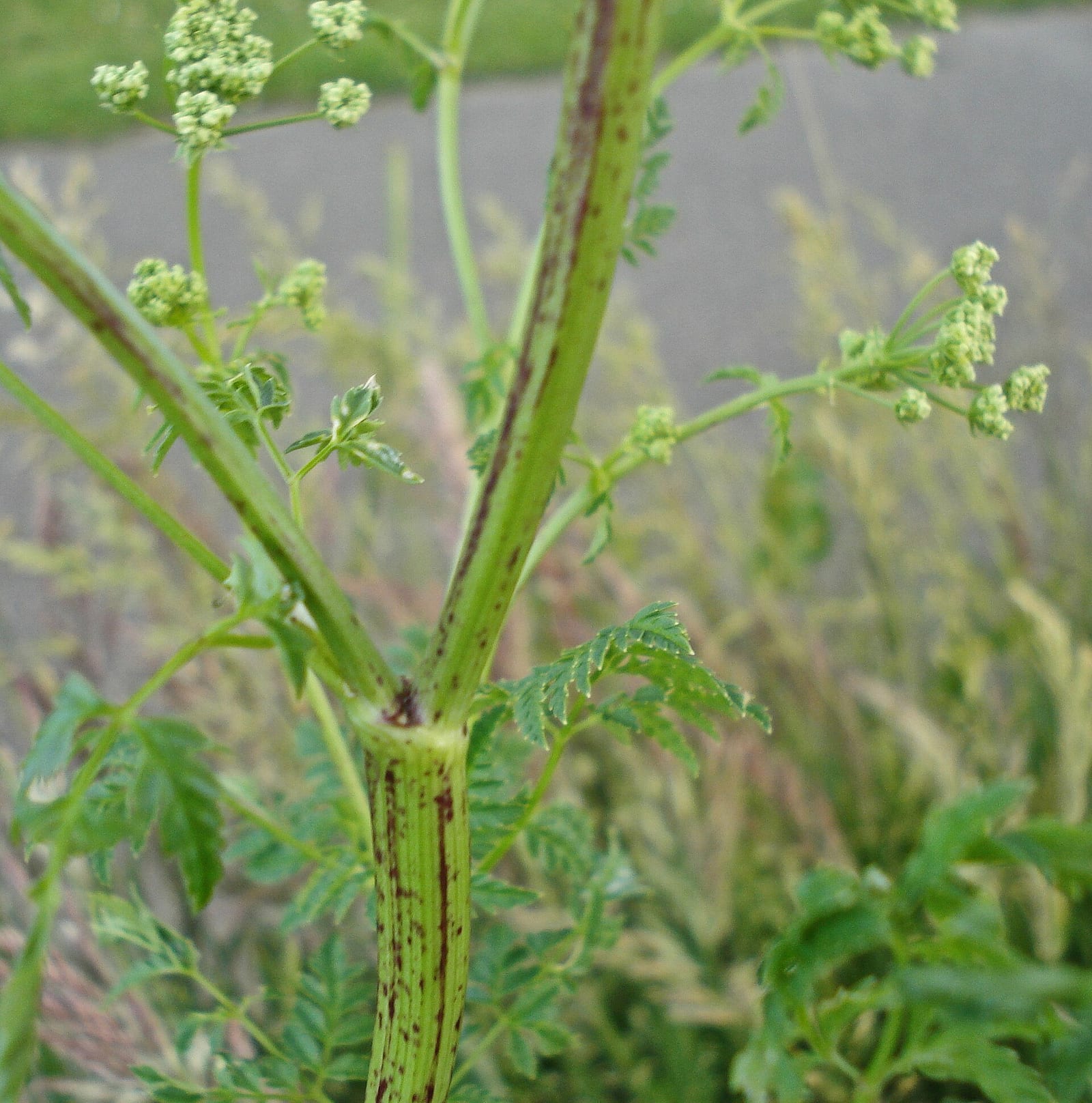
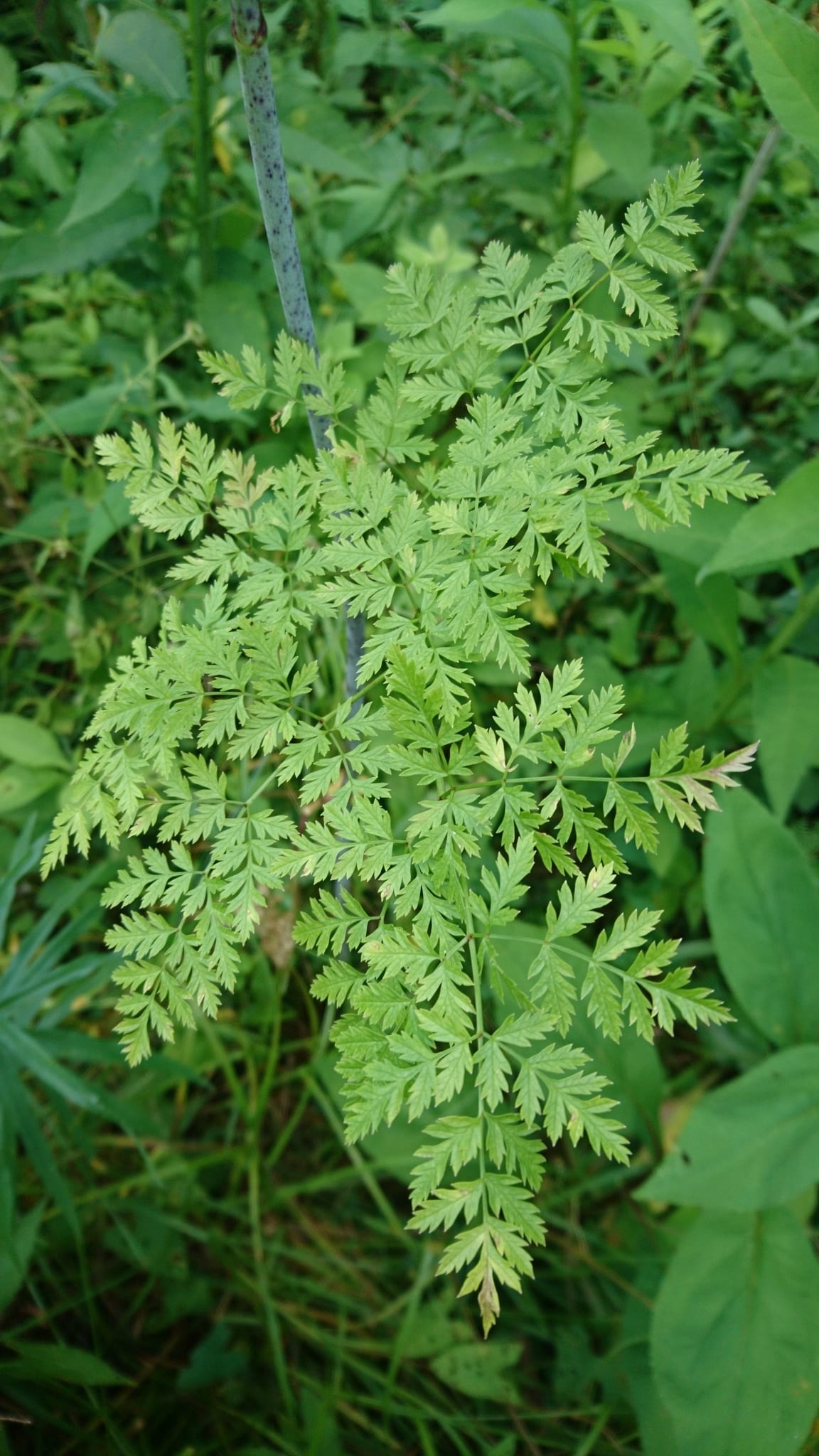
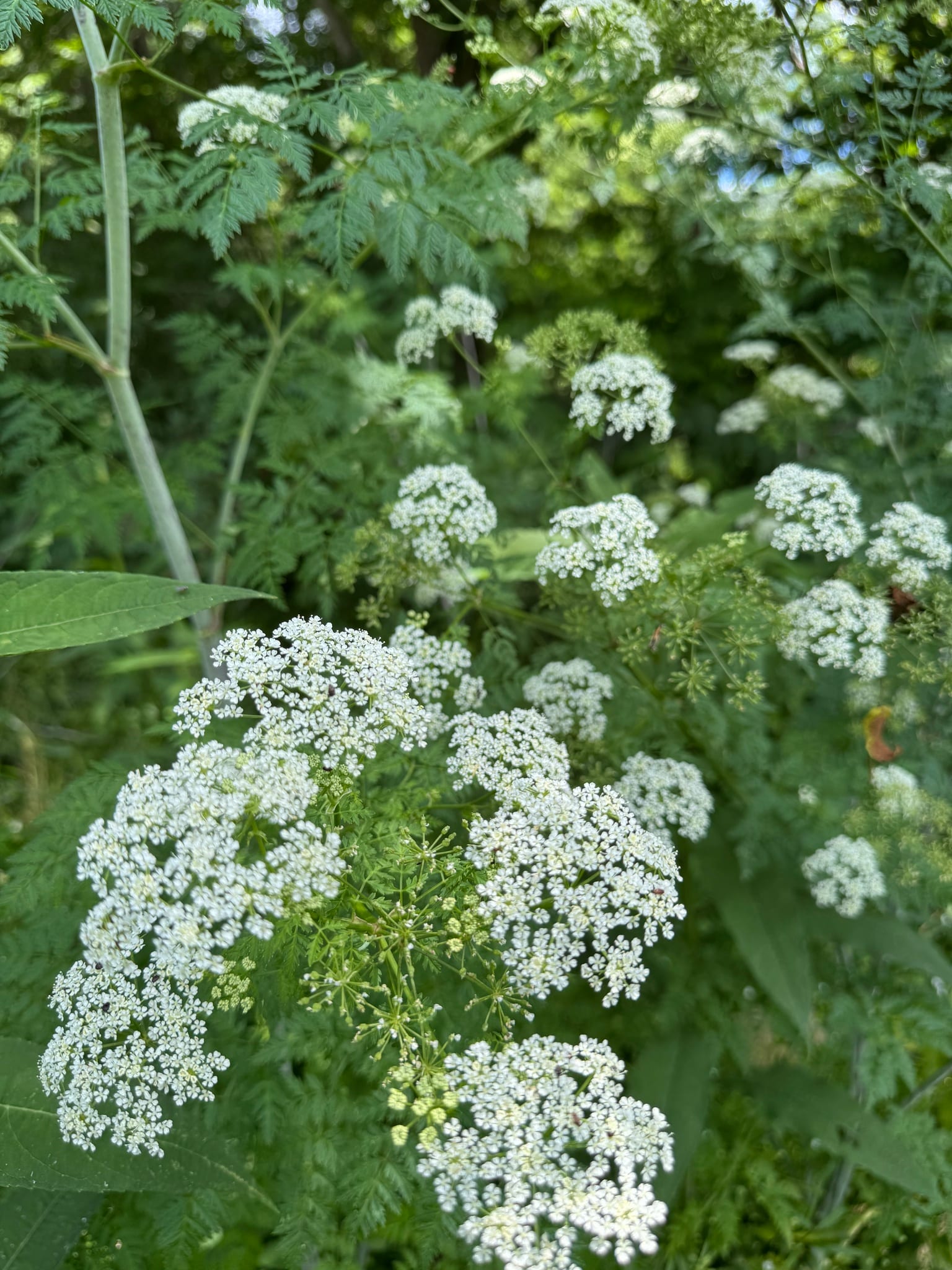
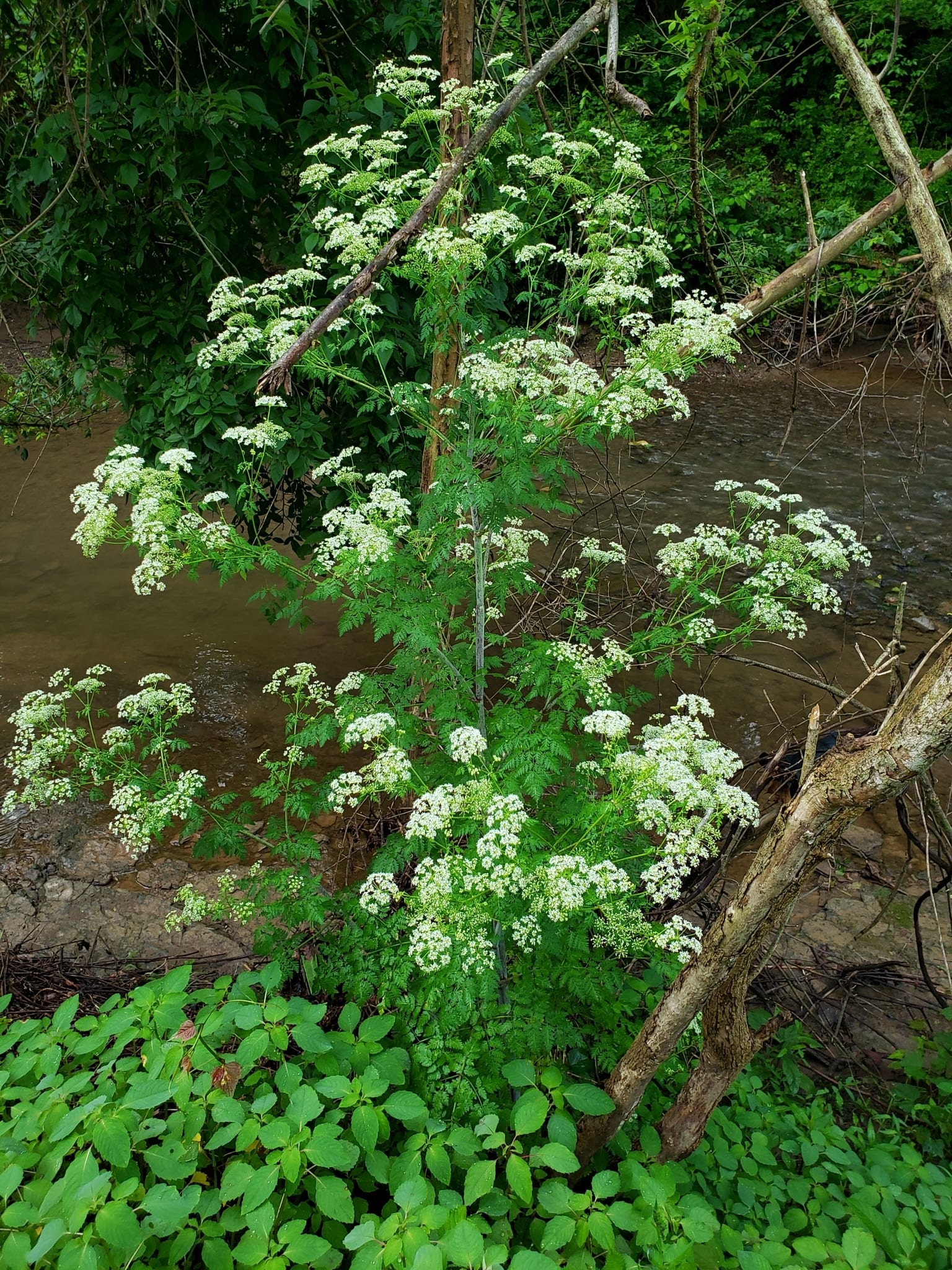
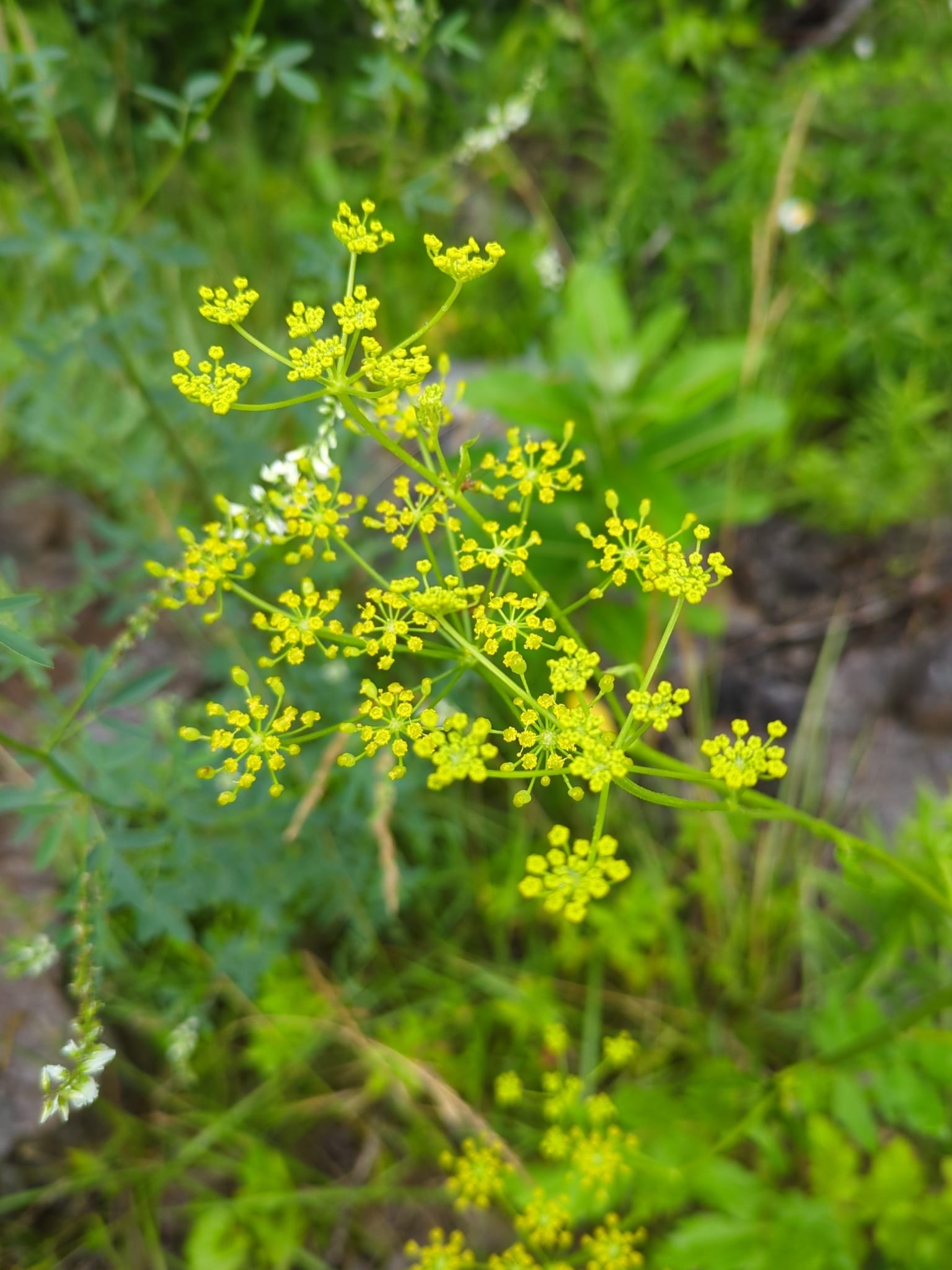
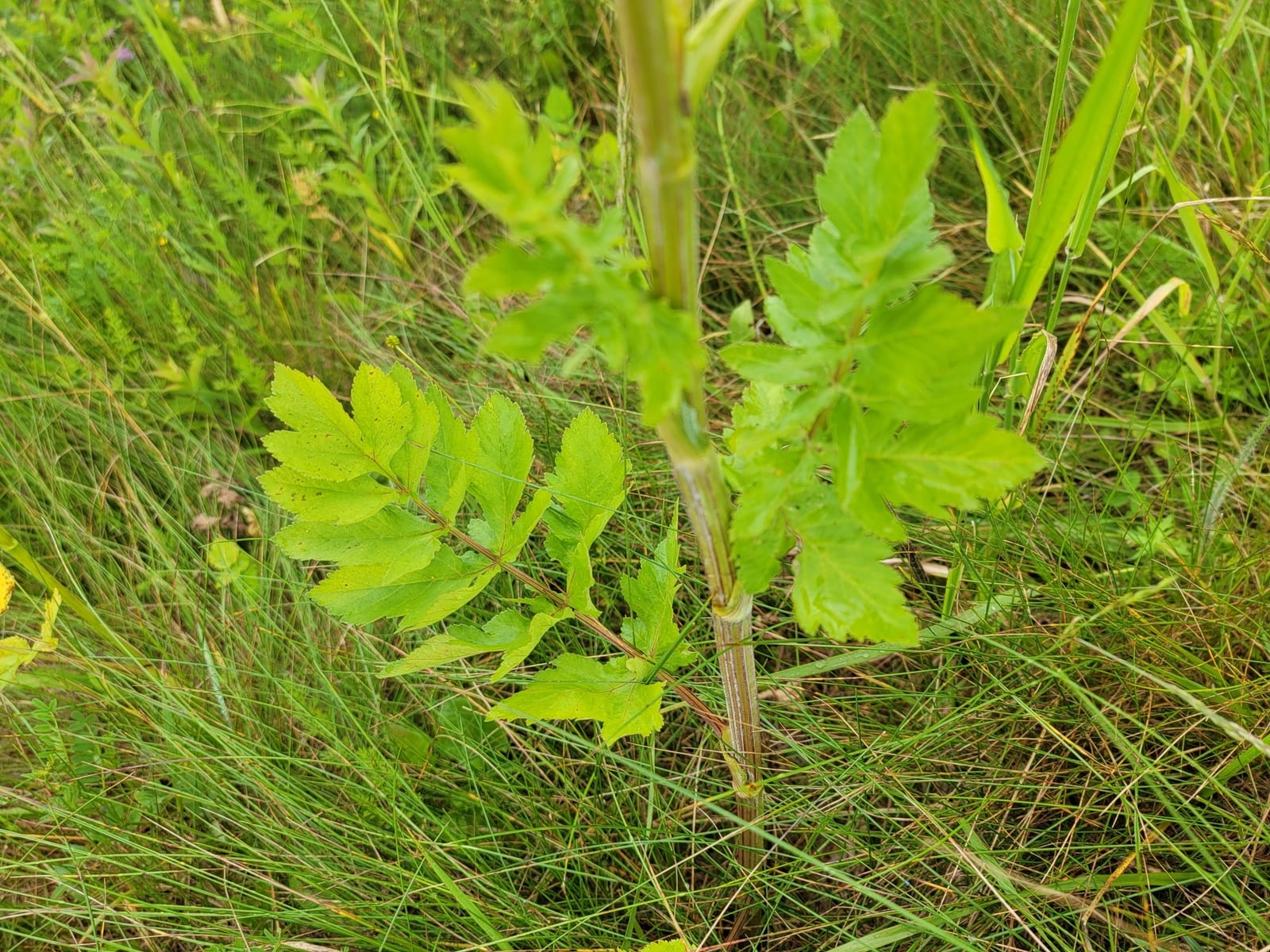
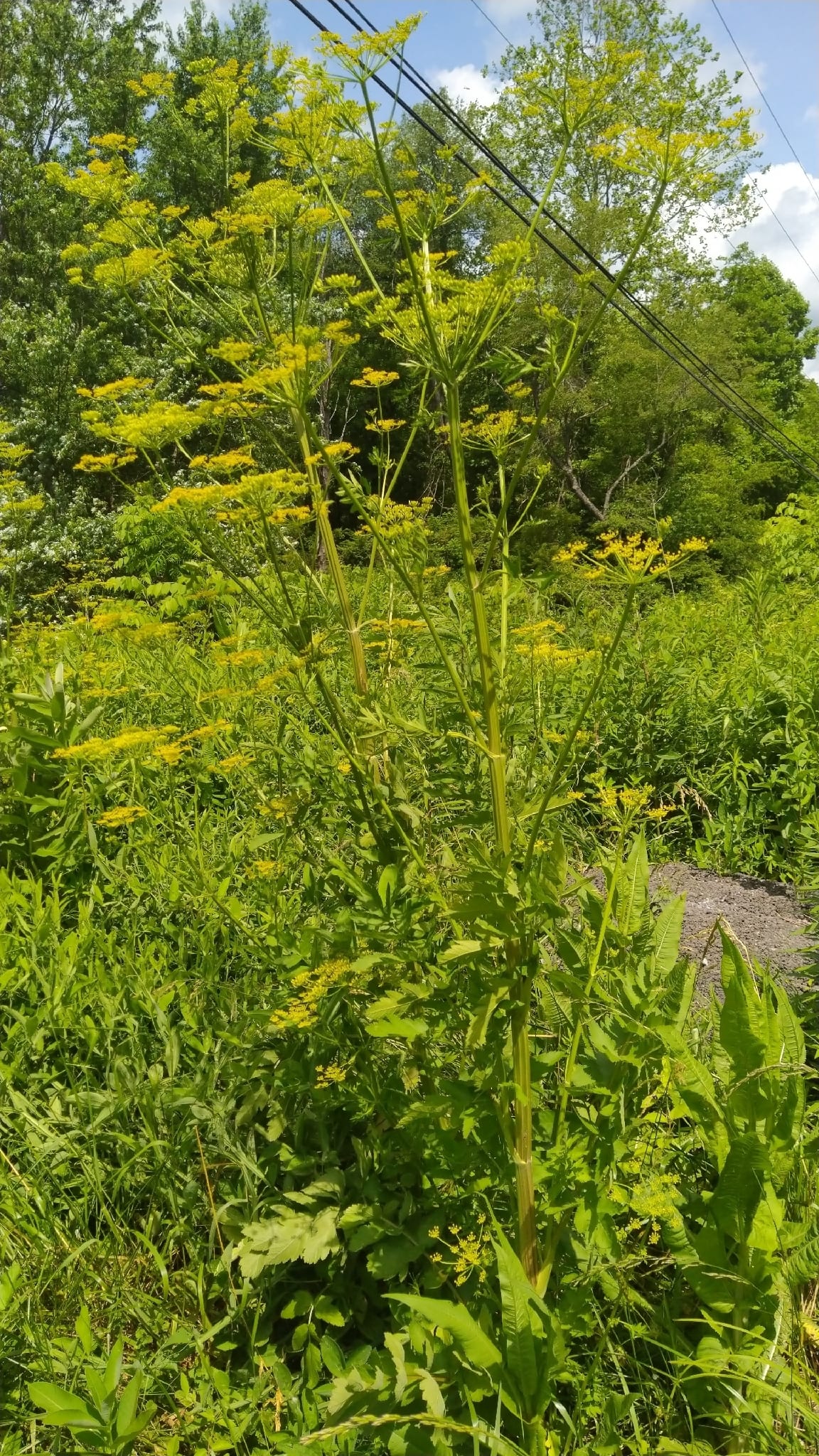
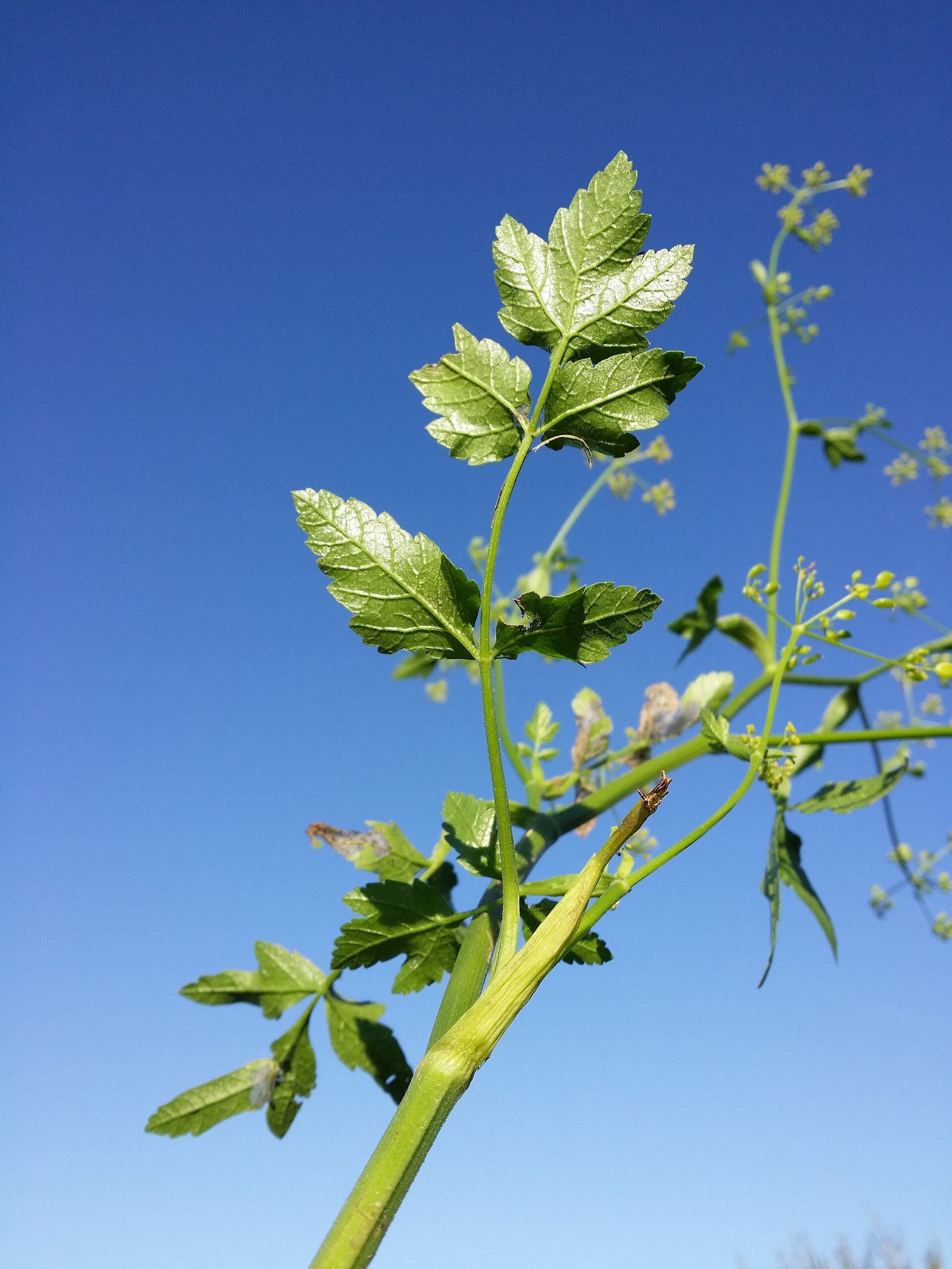
Key features
- Smooth, hairless, hollow stem with purple-red blotches
- Glossy, finely divided, fern-like leaves; musty 'mousy' odor when crushed
- Umbrella-shaped clusters of tiny white flowers
- Thick white taproot that looks like a parsnip
What it gets mistaken for
- Wild parsnipSkin irritant
Yellow flowers and grooved stem; sap causes burns in sunlight.
- Wild carrot (Queen Anne's lace)Harmless
Hairy stem without purple blotches, carrot smell, often a dark center floret.
- Elderberry (before flowering)Harmless
Woody brown stem with rough bark and toothed compound leaflets. Hemlock's stem is smooth, hairless and blotched purple-red.
See the card → - YarrowHarmless
Also has feathery, fern-like leaves, so it gets confused with hemlock. Hemlock's stem is smooth, hairless and purple-blotched, with a musty smell when crushed.
Warnings
- Do not forage from the carrot family (umbels) unless an expert has confirmed the ID.
- Wear gloves when removing it and never burn it.
- If eaten, call Poison Control at 1-800-222-1222 or 911 immediately.
In season
April, May, June, July, August
Biennial: low fern-like rosette in year one, 4-8 ft flowering plant in year two.
Habitat
Educational reference only. Never eat a wild plant or mushroom based on a website or app. Confirm with an experienced forager, your local extension office, or a mycological club. Poison Control (US): 1-800-222-1222. Call 911 for severe symptoms.