Wild Forage
Poison ivy
Toxicodendron radicans
Common vine, shrub or groundcover with urushiol oil that causes rash. Present year-round, even as bare vines.
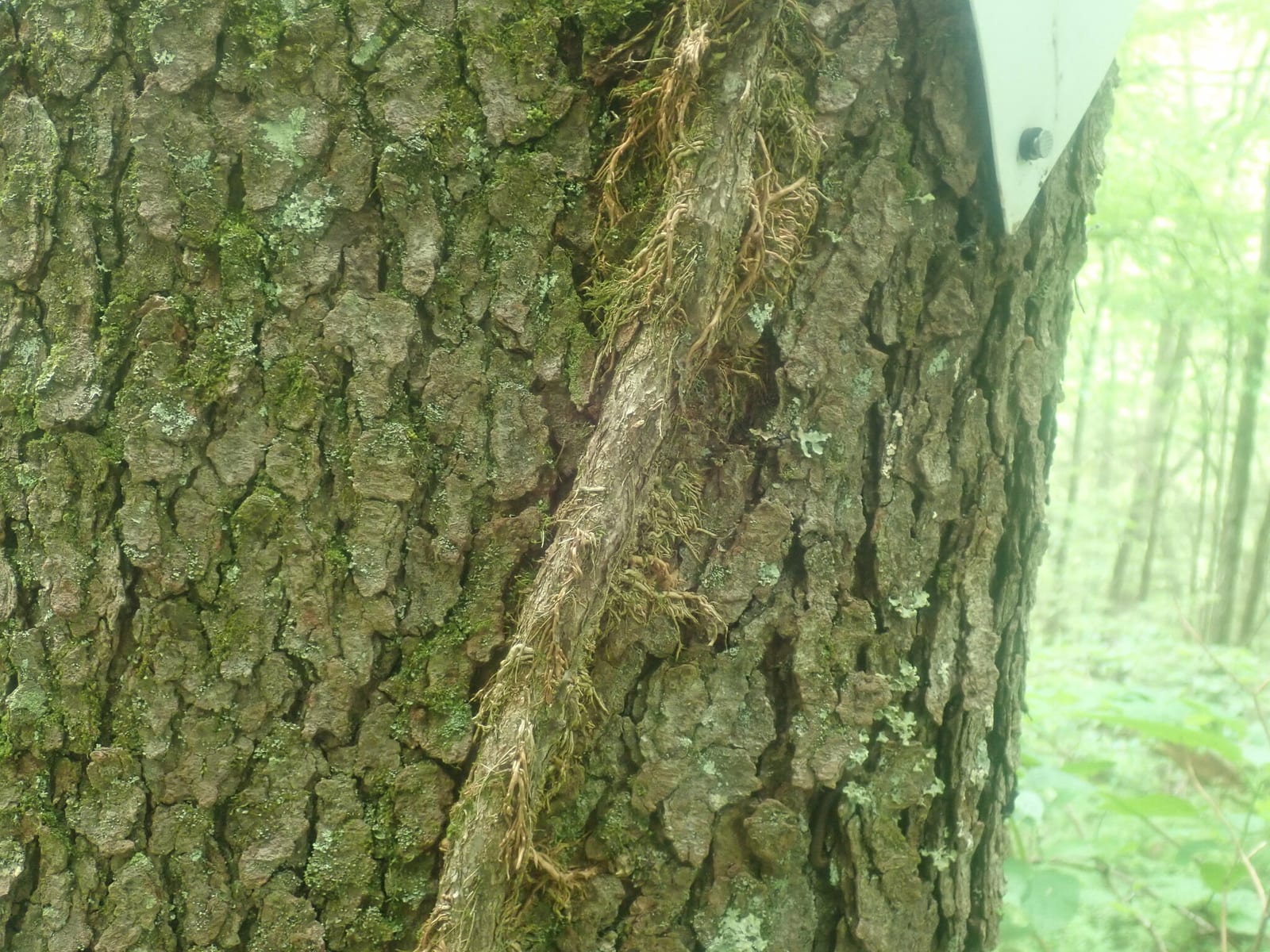
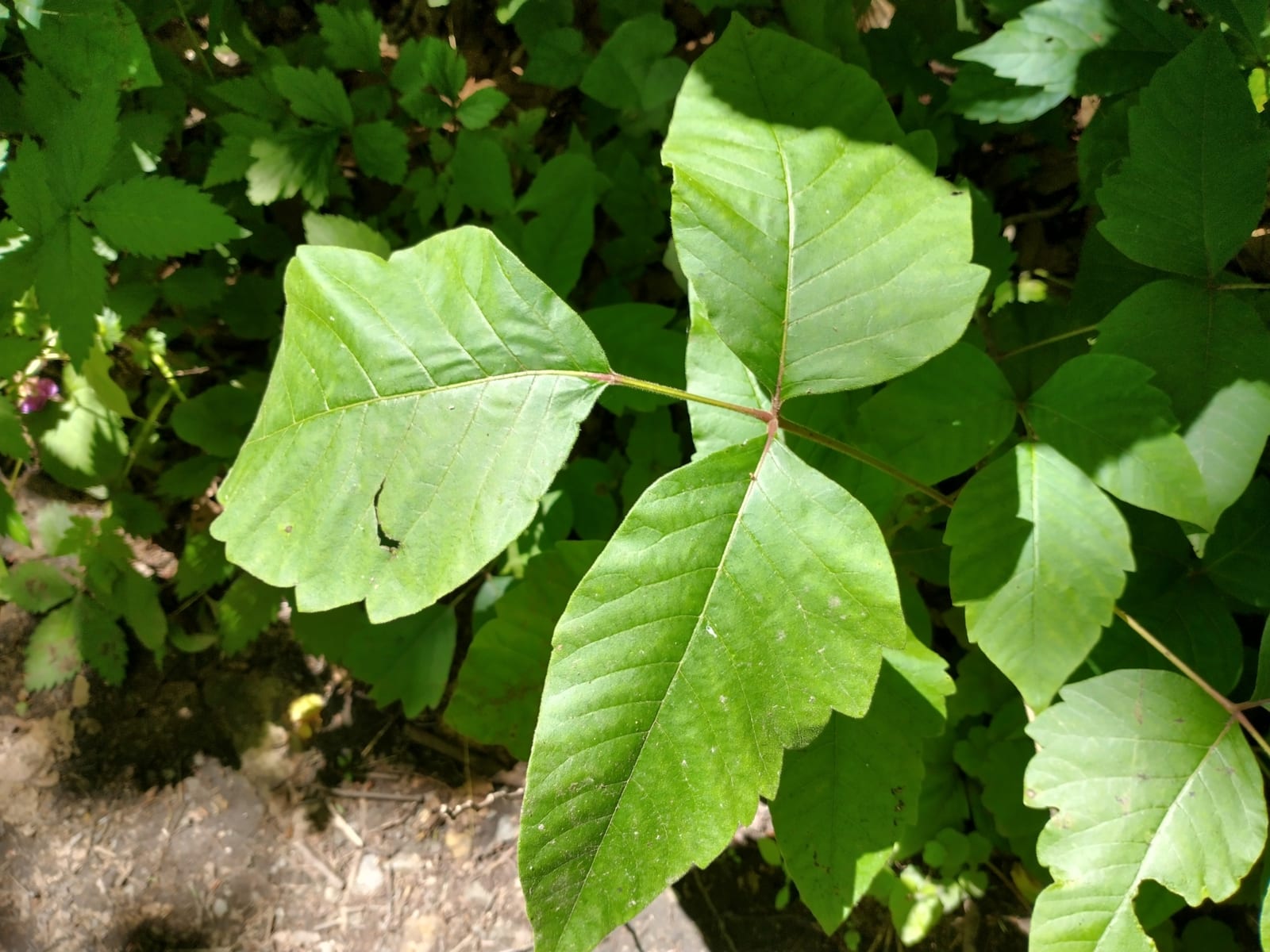
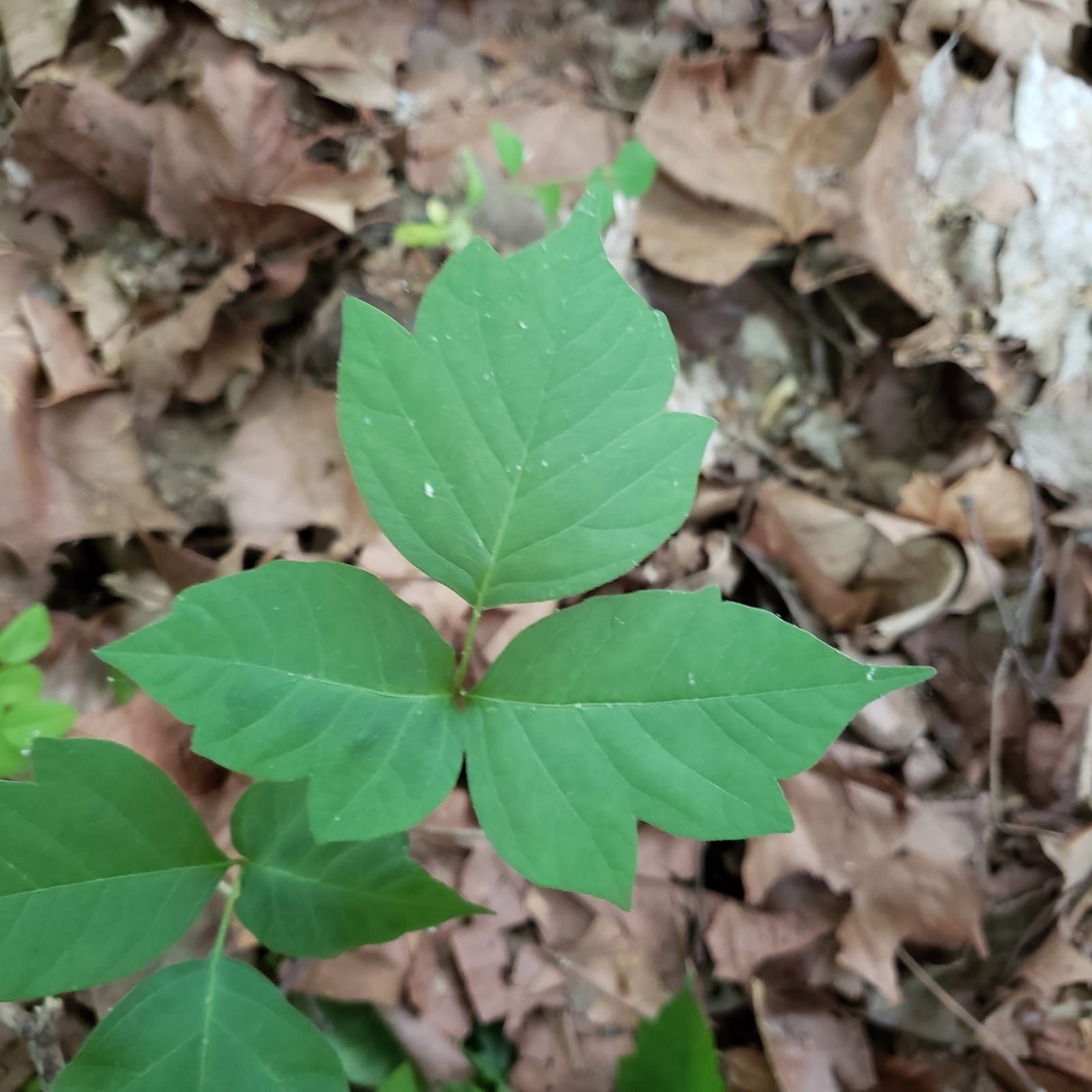
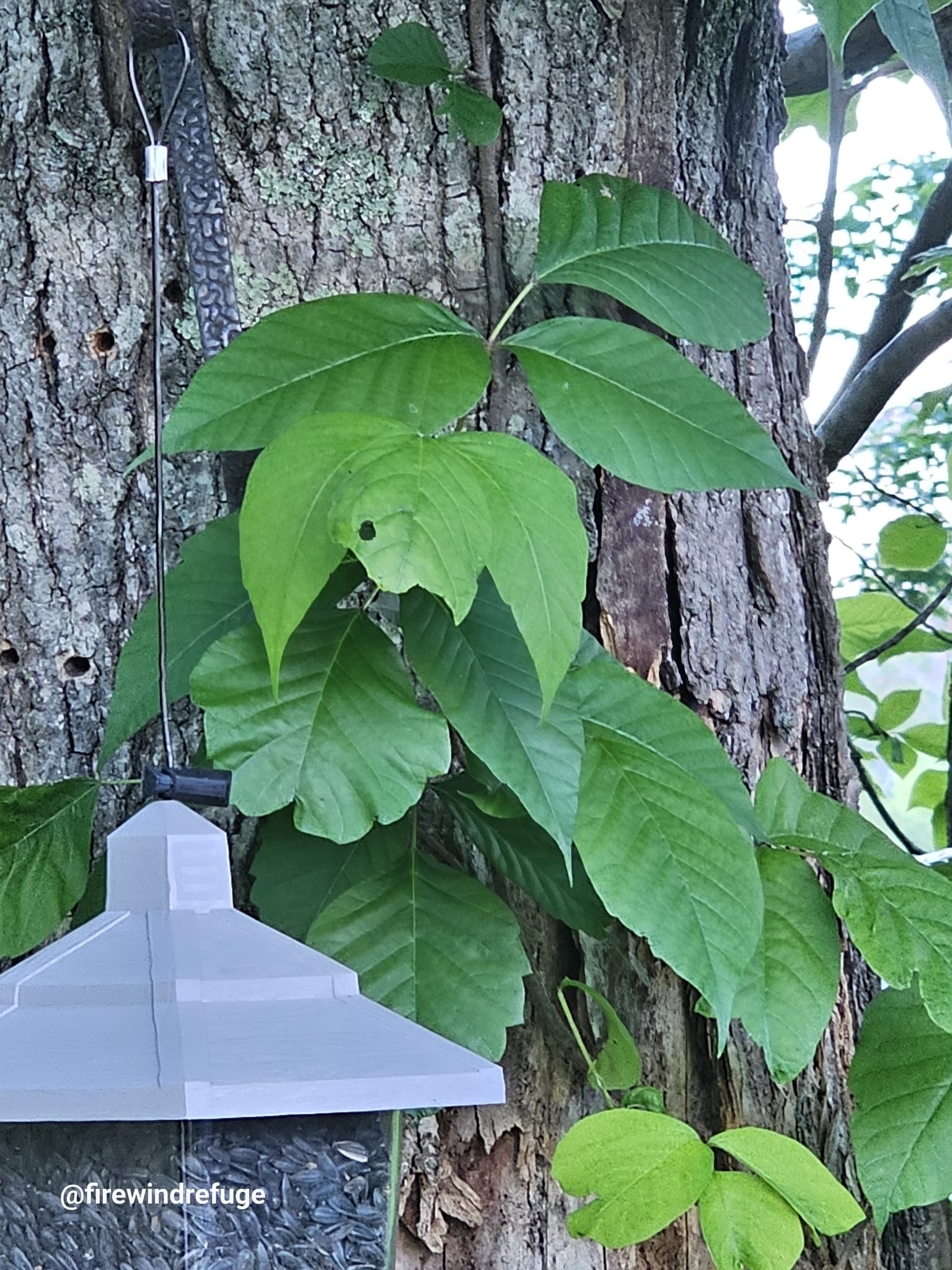
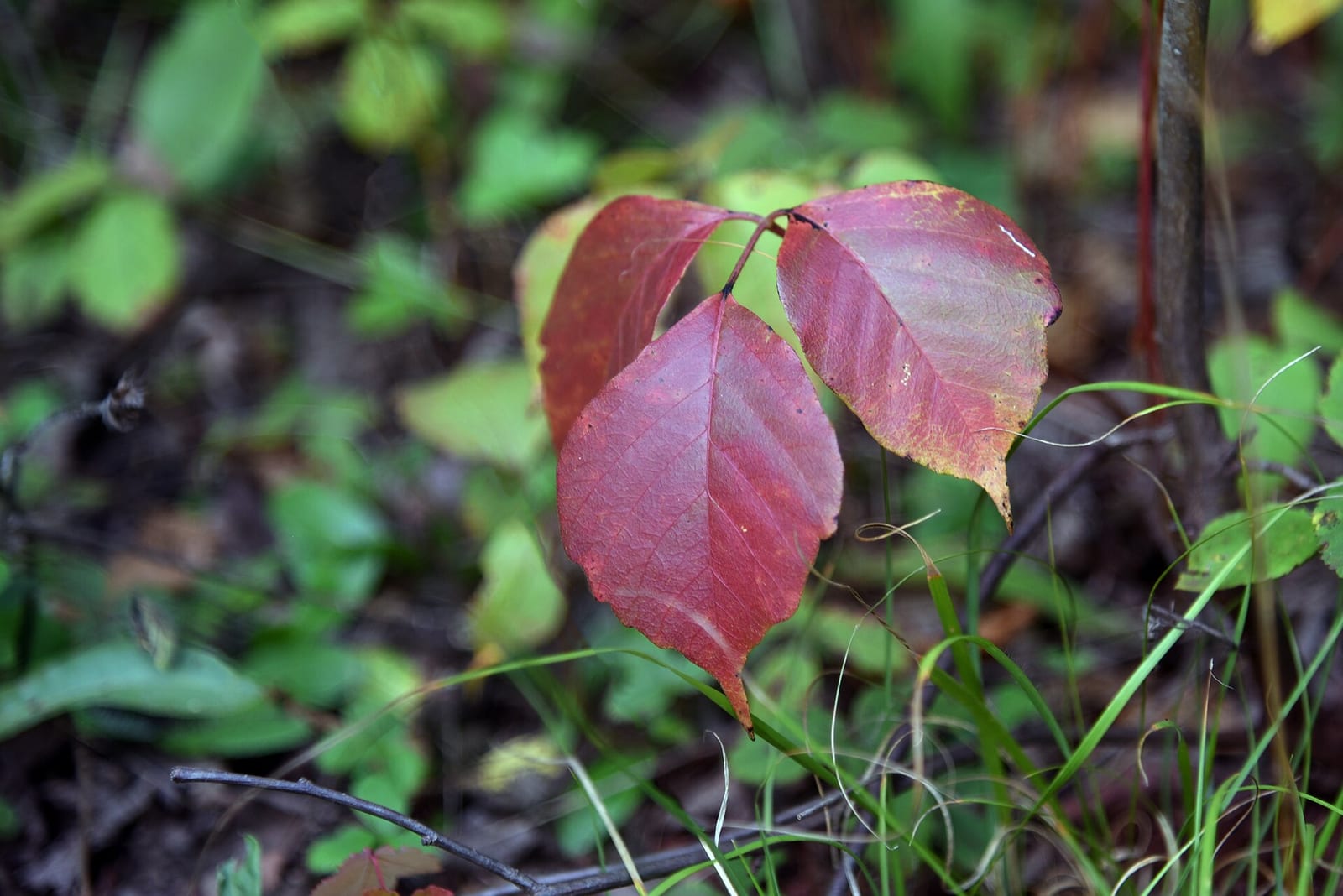
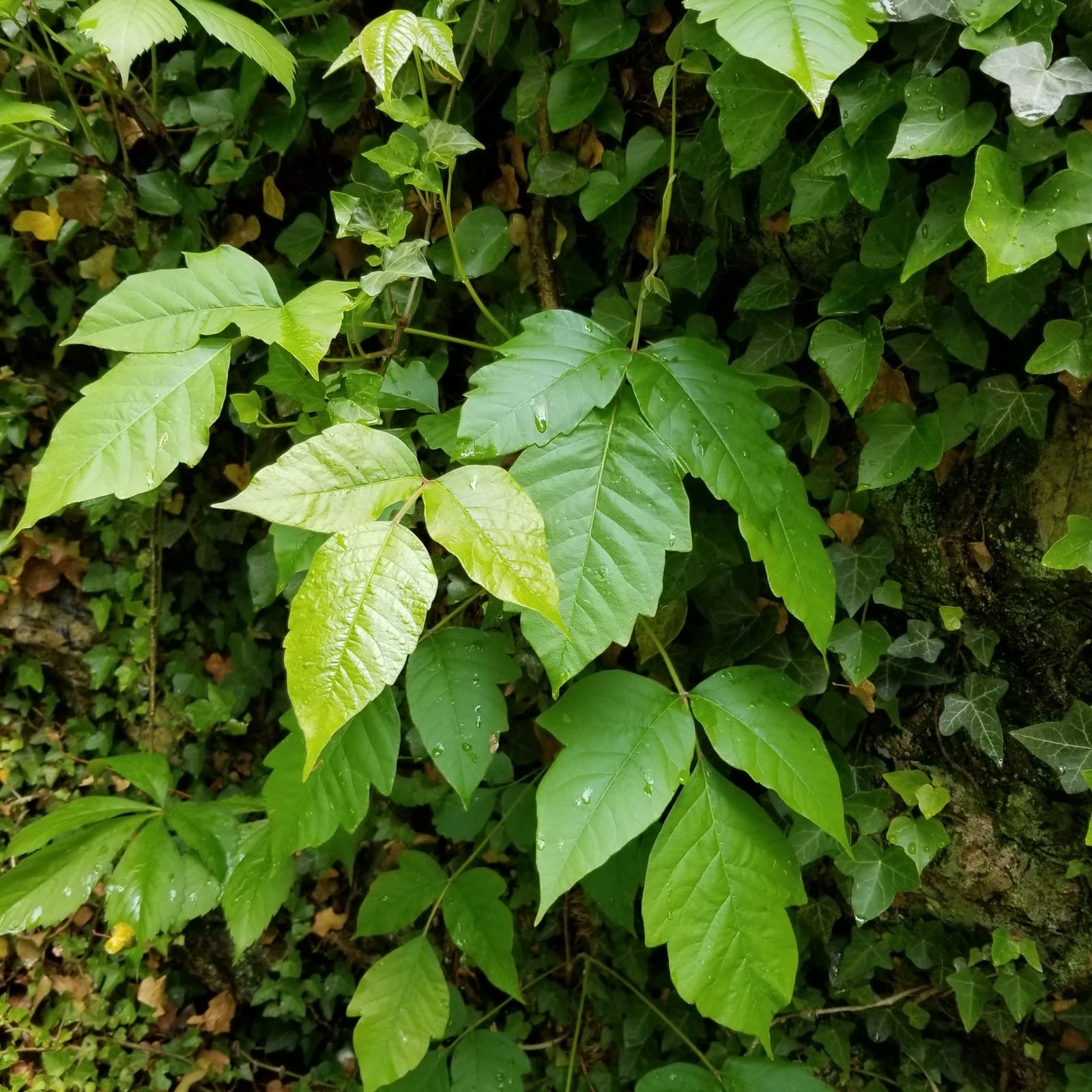
Key features
- Three leaflets per leaf; the middle leaflet has a longer stalk than the side leaflets
- Leaves alternate along the stem; edges range from smooth to toothed or lobed
- Climbing vine with dense hairy aerial rootlets, or a low shrub or groundcover
- Small whitish berries in fall
What it gets mistaken for
- Virginia creeperHarmless
Usually five leaflets fanned from one point.
- Boxelder seedlingHarmless
Leaves and stems are opposite; poison ivy alternates.
- Blackberry / raspberryHarmless
Thorny stems and evenly toothed leaflets.
See the card →
Warnings
- Urushiol persists on dead vines, tools, boots and pet fur. Never burn it.
In season
March, April, May, June, July, August, September, October, November
Red-tinged leaves in spring; red and orange in fall.
Habitat
Woods, fencerows, trail edges, trees, disturbed ground.
Educational reference only. Never eat a wild plant or mushroom based on a website or app. Confirm with an experienced forager, your local extension office, or a mycological club. Poison Control (US): 1-800-222-1222. Call 911 for severe symptoms.